etb English
Theatre
Berlin
International Performing Arts Center


Blog Archive

The Mooonshot Tape

by Lanford Wilson

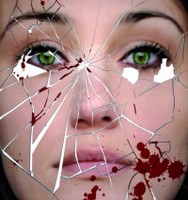
moonshot-websiteHaving come home to visit her mother who has been placed in a nursing home, Diane, now a well-known writer, is being interviewed for the local newspaper. Her remarks are an answer to questions such as where she gets the ideas for her stories, whether her youth in Mountain Grove influenced her work and why she decided to leave home. At first obliging and matter-of-fact, Diane gradually reveals more than her interviewer might have bargained for a childhood marred by the loss of her father and her mother´s coldness; the promiscuity which she was driven to in search of the love and concern which were denied her at home; and, most devastating of all, the molestation by her stepfather which shaped her character indelibly – and led to the harrowing event which she describes at the end.

To the world at large Diane is someone who has shaken off the dust of Mountain Grove and has gone on to bigger and better things. To herself, however, it is painfully clear that what she is is what her earlier life ordained – because no one ever really leaves the place from which they came.

Lanford Wilson, born 1937 in Missouri, is one of America´s most courageous and innovative playwrights and is considered one of the founders of the Off-Off-Broadway movement starting out in the gay community in New York´s Greenwich Village. He has written numerous plays, and in 1980 received the Pulitzer Prize for Drama for Talley´s Folly.

Natalia Maskevich was born in Russia and moved with her family to Brussels, Belgium where she studied dramatic arts at the Conservatoire Royal. Throughout her international career in film, TV and theater she has performed in four different languages. In 2004 she moved to Paris starring in the TV series Plus Belle La Vie. She has since worked on many theatre pieces.

Land Without Words

by Dea Loher

Lightbulp-website3War meets art in this intimate parable. A painter immerses herself in the creation of a real experience with the perfect image. But in K., a Middle Eastern city, the real images outshine and overshadow everything. She is shaken by the experiences of the effects of war, violence and poverty, impossible to depict. Now, forced to confront her lifelong beliefs in the value of art, she also questions how to deal with her position in the world today.

Lucy Ellinson was nominated for BEST SOLO PERFORMANCE at the 2009 Edinburgh Festival Fringe for Land Without Words.

Written with an astonishing sense of immediacy and the dry wit of someone being thrown into an unknown world, this is a powerful piece of poetic realism from one of Europe’s most original, prolific and challenging voices.


The Goat, or Who is Sylvia?

by Edward Albee

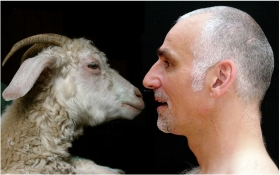
the-goat-websiteBestiality !!! A married man has a secret, he is having sex and is deeply in love with a Goat.

Provocative as ever, Albee´s The Goat is an audacious and controversial piece. It won The Tony Award for Best play in 2002 as well as the New York Drama Critics Circle Award.

A man at the pinnacle of his glittering career and marriage is in love with a goat. Who can he tell … his wife, his son or his best friends? Would they understand? Can they accept this new love or indeed could anyone of us understand?

A tragic-comedy with a bizarre theme which takes us on a rollercoaster of emotions, The Goat, or Who is Sylvia? questions and explores the limits of tolerance. Perceived values are transgressed and love and relationships become the casualites.

Albee keeps escalating the events on stage, not all at once but in unexpected jolts and turns, probing into transgressive areas of human sexuality and the limits of tolerance. It’s very funny, of course. The dark, provocative humor is masterfully woven into the play through the brittle, caustic and literary savy of the dialogue. More remarkably, the play is almost equally tragic and deeply human.

Fallen Angels

by Noel Coward

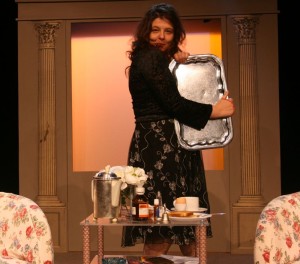
FallenAngels_EnglishTheatreBerlin_FotoAnyaKinneavy_webDesperate Housewives in London

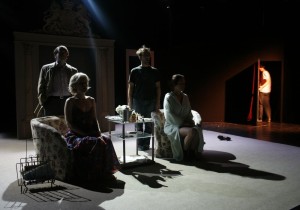
Julia and Jane, the fallen angels, are youngish married women, best friends, bored with their husbands and eager to reclaim their lost youth in the shape of a young Frenchman – with very little knowledge of English but considerable skills in the wooing department! – who had an affair with both of them before marriage. He sends a postcard to both women saying he is coming to London. They work themselves up into a drunken state of excitement in anticipation of their long-lost lover’s return…

Fallen Angels is one of Coward’s earliest plays: written in 1923, premiered in 1925, revived in 1949 and produced in America in 1955. In 1958 Coward returned to the play, re-writing and updating the set to 1934. The play’s scenario was, according to some reports, based on a real life episode when Coward and Gladys Calthrop were both dressed up waiting for a mutual boyfriend to arrive. (It is knowledge that Coward was homosexual).

Fallen Angels - Gruppe_web

The play was nearly refused its licence as “brightly written, but extremely dubious” and because “the women’s obvious willingness to go wrong, and about their pre-nuptial going wrong, would cause too great a scandal”. But the Lord Chamberlain, official censor of theatrical performances, passed it, with only a few dialogue changes, because he saw it as “so much unreal farcical comedy” – but nevertheless, Fallen Angels caused a lot of moral outrage when it was premiered in 1925.

Klaus Chatten studied acting at the Max Reinhardt-Seminar in Vienna and at the Actor´s Studio in New York. He worked as an actor at Maxim-Gorki-Theater, Theater am Kudamm, Schiller Theater, a. o. Since 1992 he has directed numerous productions for Freie Volksbühne, Kampnagelfabrik Hamburg, a. o. He wrote the script for Dani Levy’s 1996 movie Stille Nacht? Ein Fest der Liebe. His own plays include Klassentreffen and Sugar Dollies which opened 1996 at the Gate Theatre, London. Chatten has translated nine of Coward´s plays for gallissas publishing company.
Photos: Anya Kinneavy

Dirt

by Robert Schneider

DIRTAn Iraqi immigrant tells his story. His name is Sad. He lives here illegally. At night he walks our streets and sells roses. He loves to speak our language but nobody listens. Will you?


Critically acclaimed in New York, Vienna and Edinburgh, this one-man show explores what it means to be ‘invisible’ in our society.

“Riveting!” Time Out **** (Critic’s Pick, 4 stars)

“See this show…captivating and utterly heart breaking!” NYTheatre.com

“Powerful, mesmerizing and thoroughly enthralling” Talk Entertainment

Marx in Soho

by Howard Zinn

MarxInSohoImagine all Karl Marx would have to say after one hundred years of just being able to watch…

Howard Zinn’s Marx in Soho portrays the return of Marx. Embedded in some secular afterlife where intellectuals, artists, and radicals are sent, Marx is given permission by those in charge to return to Soho London to have his say. But through a bureaucratic mix–up, he winds up in SOHO in New York. Marx returns to clear his name but in doing so he gives the audience glimpses of Karl Marx seldom talked about; Marx the immigrant, Marx the father, Marx the husband, Marx the Man. With captivating wit he shares tales from his life with his wife, daughters, friends and enemies.

Howard Zinn’s Marx alone occupies the stage. “Marx has different voices. The actor has to show Marx’s outrage at social injustice, express the pedantic Marx, the vindictive Marx, Marx, the loving family man, Marx as Humorists, and a Marx that can laugh at his enemies”

misstcommunication

by The Long Song (Berlin)

an American opera of modern lovers
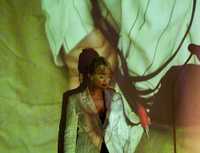
missTcommunicationA modern parable of love in the 21st century told through two short American chamber operas: The Telephone by Gian Carlo Menotti and The Letter by Brian Hulse

One man, two women and too many phones – Chivalry may not have been killed by Man. In a world of iphones, bluetooth, Skype, & IMs, a sit down, face-to-face conversation seems to be a thing of the distant past. At least that’s what Lucy apparently thinks in the comedic opera The Telephone. Written in 1947 as a social commentary on the encroachment of technology on modern life, Gian Carlo Menotti is again made pertinent in this contemporizedImageinterpretation. A modern parable about the pitfalls of telecommunication, the battle between man and technology is on. Will the couple ever have their Happily Ever After when the telephone is constantly engaged?

Whether irked or inspired by the short sms, the urgent email, the quick IM, are we cured of loneliness forever? Connected, collective, communal; one love, many loves or no love at all?

The second piece of the evening tells the story in the European premiere of Brian Hulse’s contemporary opera The Letter (written in 2003, based on Edith Wharton’s story The Dilettante). Behind the paints and veils of Victorian society, a common theme is the image of women as vulnerable, wilting flowers forever outwitted and overpowered by men. But lurking under the ruffled façades of yesteryear, the mind games between women and men seethed away, masked only in witty allusion. Thursdale´s disreputable affair with Mrs. Vervain may have seemed innocent amidst the backdrop of parlor society in Edith Wharton’s time and when Thursdale proposes to another woman, Miss Gaynor, one may think that man would again trump the ladies in deceit. It is the women however, in this ménage, who rise victorious as they parry in this Suffrage-era tale of an early Women´s Liberation. In the end they extract justice of their own from a culture often too permissive of its men.Image

The artists of THE LONG SONG came together early in 2008 in dedication to American vocal repertoire, much of which remains largely unperformed in Europe. For missTcommunication they´ve chosen one standard and one unknown work of American short opera, both centered on the themes of desire and the need for real connection and intimacy which gets so often lost in our modern society.

Three Tall Women

by Edward Albee

As an imperious, acerbic old woman lies dying, she is tended by two other women – her middle-aged, sympathetic caretaker, and a brashly confident 25-year-old from her lawyer’s office who has come to discuss finances. She is visited by a young man.

Albee´s frank dialogue about everything from incontinence to infidelity portrays aging without sentimentality. His scenes are charged with wit, pain, and laughter, and his observations tell us about forgiveness, reconciliation, and our own fates. But it is his probing portrait of the three women that reveals Albee´s genius. Separate characters on stage in the first act, yet actually the same `everywoman´ at different ages in the second act, those “tall women” lay bare the truths of our lives ­ how we live, how we love, what we settle for, and how we die.
Image

A truly moving work with an undeniable affecting emotional core. It sparkles with Albee´s trademark: absurdist humour with a passionate emotional core. Three Tall Women is his finest work since Who´s Afraid of Virginia Woolf?.

Three Tall Women is an all-women´s project and involves – both as cast and crew – ten international female theatre makers living in Berlin.

Edward Albee has admitted in interviews that this play was directly inspired by his own adoptive mother, a domineering, Amazonian woman who, like the character in the play was prone to great hatreds and paranoia. One can¹t help but admire her, though, for her extraordinary self-confidence and stamina. Her presence reinforces a theme which continues to run through all of Albee´s works: life can only be defined by the inescapable proximity of death.

Three Tall Women first premiered at Vienna´s English Theatre on June 14, 1991. It won the Pulitzer Prize for Drama in 1994.

Prophecy of a Nameless Eskimo

by Ashley Brandt

Prophecy_of_a_Nameless_EskimoImagine an overpopulated world, the Earth is bucking under the strain of our consumption. But not to worry; the government has come up with the ultimate solution.

Once a month, if your social security number is called, you have a choice: you can either report to be killed or apply to kill someone in place of you. It’s not difficult, really, with the over supply of super humane weapons available to you on every corner!

Norah Proud’s number has been called. In the short time that follows, she begins having prophetic dreams which point to a flaw in the system, gross manipulations and distortions by a ridiculous media, and she starts digging around in dangerous places to find any element of truth to her dreams. Grace, her partner, watches on in frustration as Norah pays more attention to the prophecies than finding a replacement for this month’s killing spree. Georgina, the head of the powerful Ministry for Humane Extermination, starts a desperate search for the one who is destined to expose the entire system – and stop her at all costs.

In this multi-media piece, three women and a medley of absurd television and radio propaganda tell the tale of survival and decay in this society. Their combined story is a darkly humorous one of distorted media, power-hungry officials and the mass manufacturing of very, very humane weapons.

Born in Doylestown, Pennsylvania, Ashley Brandt studied German Literature and creative writing at Brandeis University, where she wrote and directed her first play. Since arriving in Berlin, she has been very active in the theater scene as a playwright and director. Her Berlin debut, Twenty-Two Faces of Sanity, was presented at the English Theatre Berlin in February 2007, followed by The Harvest Chamber, which enjoyed three runs of performances at Humboldt University and English Theatre Berlin in 2007 and 2008. Alongside playwriting, Brandt has acted as curator of the LAB at English Theatre Berlin, and is the author of numerous short stories.

Blue Vein

by Duncan Sarkies

elsathorp-bluevein-websiteA tragic tale of an unremarkable man with an all-too-human weakness

It all starts with an innocent cheddar cheese roll, and for a while there Zack seems to have his consumption under control. But when he starts sneaking into the back rooms of parties to get his Camembert fix, spending unhealthy amounts of time at fondues and closing down vital laxative bodily functions, it is clear (to everyone around him, at least) that things have gone desperately wrong…

Alan Glen is a singer-songwriter from Canada. He spent over ten years touring Canada and Europe with his independent band before relocating to Berlin. Since then he has been dividing his time between music and the comedy theatre group Laugh Olympics. Blue Vein is his debut in the theatre as a solo performer.
Fingal Pollock has now been in Berlin for over one year. She came here after spending 18 months studying theatre with a small company of actors in rural India. In Berlin, she has worked with Laugh Olympics, Platypus Theatre, Three of Cups Productions, Galli Theater, Be Berliner, and the TUSCH in Schools project (not to mention some healthy clowning on the side!). She directed a successful run of Blue Vein in New Zealand, but when she met Alan Glen, she knew that she could not deprive the Berlin audience, and herself, of the opportunity of watching him bring this script once again to life.
Duncan Sarkies is a playwright, screen writer, fiction writer and stand-up comic. All of his work is characterized by an eccentric, bizarre and poignant black humour, which can leave the audience wondering whether the author is laughing with them or at them. Sarkies likes to show the ways in which all of us are, if not quite mad, then at least partly unhinged.
Photo: Elsa Thorpe