etb English
Theatre
Berlin
International Performing Arts Center


Blog Archive

Terminal Connections – The Airport Plays

presented by PLAY2C (Berlin)

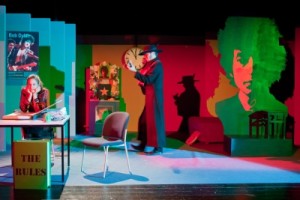
AirportPlays3_webLives in transition in the contained and suspended world of an airport setting
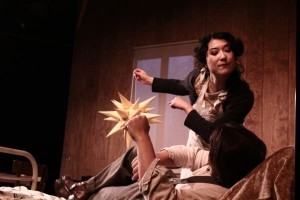
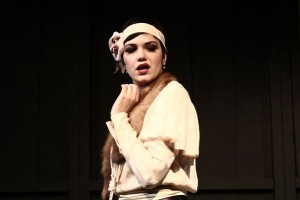
More than a dozen characters are weaving their way into each other over the course of a series of meaningful departures, layovers or arrivals. In these slices of destiny we travel from suspicion to attraction, fear to trust, alienation to connection and stress to love.

The One Act Plays:

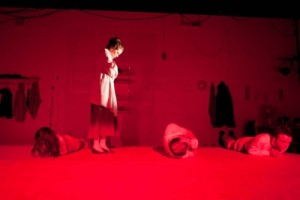
Where I Come From by Daniel Reitz : En route young Shay finds herself confronted with the hard facts of her destination by the radical demonstration of a fellow traveller. Image

Storks by Catherine Filloux : An unnerved grandmother finds an unexpected communion with her estranged granddaughter in the course of a layover.

Haere Mai Ki Aotearoa by Julie McKee : Expat New Yorker Fiona returns to her native New Zealand and rather faces the audience than her family waiting outside the gate.

Terminal Connection by Ari Roth (Directed by Peter Romero) : Two arrivals strive to continue an intimate inflight moment at the terminal where they part after finding new direction in a bittersweet meeting.

The Airport Play by Alexandra Gersten-Vassilaros : a distressed woman finds enlightenment in the form of a mercilessly nosy stranger who helps to mend two broken hearts, his and hers.

The Flight of the Last Calhoon by Quincy Long : Gosts of the past are challenged and transformed by a desperate passenger with the help of two very curious security personnel.

The chorus figure of a grounded Air Captain joins all six plays.

My Romantic History

by D C JACKSON

MRH_Web

“I suppose there comes a point when you have to face that you’re just ‘that age’ and that if you’ve got a man who isn’t a retard, a rapist or a Rangers supporter then he’s probably about the best you’re going to get.”

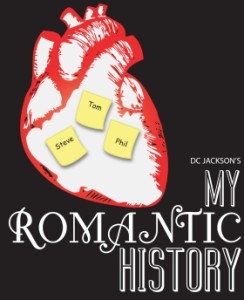
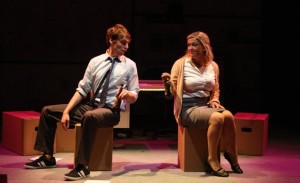
My Romantic History takes a sharp, hilarious and affectionate look at modern relationships and the rocky road to true love. Office colleagues Tom and Amy´s drunken one-night stand seems to be morphing into a full-blown relationship before their very eyes, but before they can face the future, they’ll have to deal with the ghosts of relationships past…

“The genius of this play is that it acknowledges the ambivalence of postmodern sexual lives – the lack of commitment, the coldness, the sense that reality never quite measures up to some plastic ideal – while simultaneously overcoming all that with the wit, the humanity, the ability to laugh, learn, and move on, that is the real redeeming quality of our species. Jackson’s clear-eyed but brilliant comic invention is a joy, as is his inimitable way with words.” The Scotsman

MRH2_web
First produced by The Bush Theatre and Sheffield Theatres in association with Birmingham Repertory Theatre on 5th August 2010 at the Traverse Theatre Edinburgh.

D. C. JACKSON is a Glasgow-based writer. His plays include The Wall (2008), The Ducky (2009) and The Chooky Brae (2010), a trilogy of plays written for Borderline Theatre, Glasgow); Company Policy (2010), Out on the Wing (2008), Matinee Idle (2006) and Drawing Bored (2006), all for the A Play, A Pie and A Pint series at Oran Mor, Glasgow. He has written for BBC Radio Scotland and Radio 4. He is currently under commission to the Royal Court Theatre and the National Theatre of Scotland.

Image: Anna Clark / Photo: Peter Groth

supported by  British CouncilNEW_BLLUE_180breit

Summer and Smoke

by Tennessee Williams

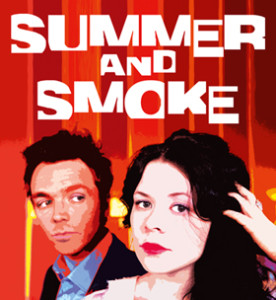
SummerandSmoke_image02_280They were two ill-starred lovers: a minister´s shy, sensitive daughter and a wildly passionate, carefree young doctor. One hungered for the spirit, the other hungered for the flesh…

Alma: There are some women who turn a possibly beautiful thing into something no better than the coupling of beasts – but love is what you bring to it. Some people bring just their bodies. But there are some people, there are some women, John who can bring their hearts to it, also – who can bring their souls to it!

John: Souls again, huh – those gothic cathedrals you dream of. Your name is Alma and Alma is Spanish for soul. Some time I´d like to show you a chart of the human anatomy that I have in my office. It shows what your insides are like, and maybe you can show me where the beautiful soul is located on the chart.

On 6 October 1948, Summer and Smoke premiered at the Music Box Theater, New York. In 1952, Geraldine Page played the lead role in a revival at the newly founded Circle in the Square Theatre in downtown New York. Her legendary performance is credited with the beginning of the Off-Broadway movement.

Summer and Smoke - English Theatre Berlin

To celebrate the 100th anniversary of Tennessee Williams´ birthday English Theatre Berlin presents a production of his classic, Summer and Smoke, directed by Blake Robison, Artistic Director at Round House Theatre, Washington/DC.

Thomas Lanier “Tennessee” Williams was born on March 26, 1911 in Columbus, Mississippi. The second of three children, his family life was full of tension. His parents, a shoe salesman and the daughter of a minister, often engaged in violent arguments that frightened his sister Rose.

In 1927, Williams got his first taste of literary fame when he took third place in a national essay contest sponsored by The Smart Set magazine. In 1929, he was admitted to the University of Missouri where he saw a production of Henrik Ibsen´s Ghosts and decided to become a playwright. But his degree was interrupted when his father forced him to withdraw from college and work at the International Shoe Company. Eventually, Tom returned to school. In 1937, he had two of his plays produced by Mummers of St. Louis, and in 1938, he graduated from the University of Iowa. After failing to find work in Chicago, he moved to New Orleans and changed his name from “Tom” to “Tennessee” which was the state of his father’s birth.

Summer and Smoke - English Theatre BerlinIn 1939, the young playwright received a $1,000 Rockefeller Grant, and a year later, Battle of Angels was produced in Boston. After moving from St. Louis to New Orleans in 1939, he adopted “Tennessee Williams” as his professional name. In 1944, what many consider to be his best play, The Glass Menagerie, had a very successful run in Chicago and a year later burst its way onto Broadway.
Williams followed up with several other Broadway hits including such plays as A Streetcar Named Desire, Summer and Smoke, A Rose Tattoo, and Camino Real. He received his first Pulitzer Prize in 1948 for A Streetcar Named Desire, and reached an even larger world-wide audience in 1950 and 1951 when The Glass Menagerie and A Streetcar Named Desire were made into motion pictures. Later plays which were also made into movies include Cat on a Hot Tin Roof (for which he earned a second Pulitzer Prize in 1955), Orpheus Descending, and Night of the Iguana.

On February 24, 1983, Tennessee Williams choked to death on a bottle cap at his New York City residence at the Hotel Elysee. He is buried in St. Louis, Missouri. In addition to twenty-five full length plays, Williams wrote dozens of short plays and screenplays, two novels, a novella, sixty short stories, over one-hundred poems and an autobiography.

pics: Christian Jungeblodt

Brave Near World

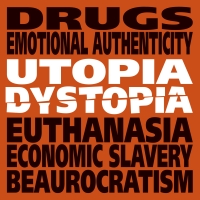
10-Minute Play Competition 2011 on the theme UTOPIA/DYSTOPIA

10mp2011_websiteWhat will life be like for children being born today? Will they see Prenzlauer Berg become a gated community? Will Mandela’s legacy cause South Africa to be the new model for civilization?
Will genetically modified tomatoes officially become animals and start appearing in zoos? Will our technological fetishes ever actually save us more time than they cost us?

The winners were:

Indecent Exposure by Tamsin K. Walker

Poor by Nicole Paschal

Three Grams of Spacebox by Oliver Ralli

Nice Woolly Cardigans by Mark Daver

The Connection by Joshua Crone

An Experiment with an air pump

by SHELAGH STEPHENSON

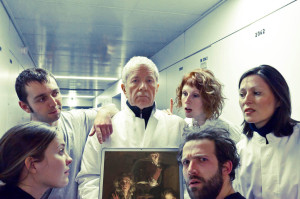
20101214JU6573_S01Y_sA social drama, a science play, a thriller


Something revolutionary is happening at the Fenwicks’, while there’s trouble in the air at Ellen and Tom’s. Fenwick is taking science to dizzying heights, his assistant is after the maid and a mob is rioting at the front door. Ellen, a geneticist, has moral qualms about a job offer and Tom is unemployed. The Fenwicks are living in 1799, Ellen and Tom in 1999 – in the same house. There’s a body in the basement. Who buried it there 200 years ago?

Shelagh Stephenson explores the question of how much morality science can take – and how much it needs – with two compelling examples from two different times in history. To what lengths should the study of anatomy go to procure cadavers at the end of the 18th century? And how far should genetics go at the beginning of the 21st century?

What is good and what is evil science? Shelagh Stephenson projects this question further back in time than most do. Academic debate on the ethical limits to scientific research often focuses on the atomic bomb and unscrupulous Nazi researchers. However, the long period in which body snatching was commonplace for the study of anatomy goes back 150 years before then and is a dark chapter in the history of colonial England between Newton and Darwin.
Modern genetics is constantly forced to deal with the heatedly debated social relevance of its work and results. Genomic research will soon be able to decode our entire genetic make-up at little expense. Will we soon find out in the neighbourhood “Gene Shop” that we are particularly susceptible to alcoholism, cancer, or Alzheimer? Is that something to take seriously? And is it something that we want to know? Who else might want to know, and why?

An Experiment With an Air Pump was the second production in our Science & Theatre program.

Supported by   Druck  fu_logo_150

Shelagh Stephenson was born in Northumberland and read drama at Manchester University. Her first play, The Memory of Water (1995) was a huge success and won her an Olivier Award for Best Comedy; her second one, An Experiment with an Air Pump (1998) was equally sucessful and won the Peggy Ramsay Memorial Award. Other plays are Ancient Lights (2000), Mappa Mundi (2002), and Enlightenment (2005). Her latest one is A Northern Odyssey (2010) about American painter Winslow Homer´s two-year visit to Northumberland in the early 1880s. She has also written numerous radio plays and TV scripts. The Memory of Water was made into a film called Before You Go (2002) starring Julie Walters and Tom Wilkinson and directed by Lewis Gilbert.

 pics: Christian Jungeblodt

The Gift of the Magi / Immigrant Xmas

Berlin International Opera

GiftOfTheMagi2German premiere of David Conte´s chamber opera The Gift of the Magi

La Bohème in New York 1910 and Berlin 2010 – two metropolitan cities in different eras, both the focus of immigration of young people, who left their home to find a better life.

It´s Christmas time, the season of family, joy and giving. But how do you feel when your family is far away? And money is so tight you cannot even buy a gift for your loved one?

The touching story of celebrated American writer O. Henry about Della and Jim, two young and penniless lovers in New York, was turned into a chamber opera by San Francisco-based composer David Conte.

Berlin International Opera stages the German premiere of this new romantic opera and links it with the sometimes bleak reality of the lives of foreign artists in Berlin, who came to this city, attracted by its wide range of possibilities.

With humour, sensitivity and freshness, the production investigates the co-relation between fantasy and reality, life on and off stage in a foreign place. Sung and performed by singers of different ethnic and national backgrounds – and documentated on film at authentic locations in Berlin.

giftofthe magi“Berlin in winter is a harsh place to be. Being far from home and family in the season of giving and sharing, can make you even more aware of how alone you are.” (Lauren Lee American soprano)
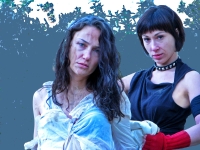
Della and Jim made an oath not to give each other anything for Christmas this year. Yet both have very different plans….

“I have related to you the chronicle of two foolish children in a flat who most unwisely sacrificed for each other the greatest treasures of their house. But let it be said that of all who give gifts these two were the wisest. They are the magi.” (O. Henry: The Gift of the Magi)

supported by the Berlin Senate Intercultural Affairs Department

DEEP WIVES, SHALLOW ANIMALS

by Howard Barker

deepWives_website“By dignity I mean the prospect of a terrible indecency” Howard Barker

On House arrest in her own home, once magnificent but now ravaged by a mysterious change whose the destructive impact continues to be felt, the Countess Strassa is now subject to the authority of those who, until recently, were her servants. We will never know the exact nature of the event which has produced such a change; at best can we measure the effects. The question posed by the new situation is not about the reversal of power relations – it‟s already done – but of exceeding them, that is to say the appropriation of the other, body of the other, that Howard Barker defines in bluntly erotic terms: what is required of Strassa is that she consents to be owned by the husband of her former maid. Abject perspective in the physical absence of the husband that makes the two women create a strange relationship of antipathy, rivalry, but also unexpected complicity, and gives rise to a tense dialogue, powerful, sharp as a razor, which opened excavation at the heart of the human and uncovers what makes it beat: desire, frustration, thirst for dignity.

“I’ve always been attracted by the plays of Howard Barker. His more abstract world, more dreamlike than his English contemporaries, fascinates me. His baroque side also, that exceeds the narrow confines of our time. Natasha’s proposal was an opportunity to move to act: to finally stage a piece of him with a couple of excellent actresses. And the choice has logically focused on “deep spouses, shallow animals” For it concerns two women here. In a climate of an upheaval. A Coup. Two women in a time when power relations are reversed. Where the one which reigned will eat dust. And the one that was invisible will be able to shine in the light. Where the one who had everything, now doesn‟t have anything and the one who had nothing, now possesses all thing. Two women in a permanent relationship of domination and submission which reminds of “The Maids” by Jean Genet. But if the Barker play is inspired by it, that is just to better project it in the heart of the preoccupations of our time, playing continuously on the fear of a world that is on the road to ruin and on the need for real and concrete links (even violent) in a more and more virtual world: as in a video game where one chooses his clothes, the color of his hair, his car, his house…Here it‟s about choosing the manner in which one of the two women will be raped. Under the pretext of power inversion (the mistress becomes the slave of her servant) the two women are playing themselves a dangerous game that keeps their senses awake even if a priori, all is dead around them. Apart from this mechanical dog, ersatz of Japanese robots that is constantly coming to collect its share of the spoils: a piece of the dress of the mistress being more and more laid bare. Because what remains of power without the attributes of power? And even further in this game of reversed mirror: what remains of desire without the attributes of power? In this dance where you never really know who leads the game, it is an entire pursuit of desire which is unfolding before our eyes, combining abandonment and revolt of bodies subject to the tyranny of the learned thought.”    Patrick Verschueren

Me, myself & you in cyberspace

A theatrical performance about our communication, identity and life in cyberspace

with students from the Leibnizschule, Kreuzberg

Who am I on Facebook, Schüler-VZ , Twitter & Co?

The play deals with questions like: Am I still me in cyberspace? Are my friends my real friends? What happens to our communication, our identity, our time in virtual reality?

What are the differences between my life in cyberspace and in my own reality? How does cyber-communication influence my life, my time, my friendships, my relationships?

Is it a new FREEDOM or is it a threat?

Never alone anymore? Never bored anymore? Always connected? What about stalking, controlling other people or have you been stalked/controlled/followed by someone you know or don’t know?

What happens if you are mad at someone? What happens if that gets slightly out of hand? One wallpost might be the beginning of something incontrollable… oops – and before you know it: you are cyberbullying someone.

A play about the glories (spreading and sharing good news, connecting across the planet, staying in touch) and the dangers of it (like cyberbullying, loss of identity, addiction)


Short Shrifts

12 short plays by Peter Oswald


ShortShriftsPeter Oswald´s short plays represent a re-discovery of the complexity of the human spirit in all its manifestations of comedy, tragedy, farce, surrealism, the grotesque and the very real.

Attention Seekers (UK) invite audiences on a spell-binding journey into ‘marriage’ and the ancient relationship between the masculine and the feminine.

The Event

by John Clancy

EVENT_Calvitto-lg0014(Lights up on a man.)
A man stands in a pool of light in front of a room of suddenly silent strangers.
Stop me if you’ve heard this one before.
(Pause.)
They watch him, waiting to hear what he will say next.
Seriously. Stop me.

The highlight of The Edinburgh Festival Fringe 2009 and the Adelaide Festival 2010: Adelaide Fringe Award Best Performer 2010 for David Calvitto (also Edinburgh Fringe Festival Stage Best Actor 2002 for Horse Country and Audience Favorite Award for 12 Angry Men at the 2003 Edinburgh Festival)

What if everything we believe and experience is an illusion-a fantasy designed to make us forget all that’s important and create a kind of collective amnesia? Are we all alone on our own private stages? Is there anything out there in the darkness? Are we who we say we are, or are we just pretending?

A deceptively simple piece of theatre, which playfully but profoundly leads us to question, not only the nature of reality, but the very nature of existence itself. A man standing in a pool of light wittily deconstructs the theatrical experience while offering parallel insight into modern life.

“An intelligent and exhilarating monologue, performed with a conjurer’s elan by David Calvitto …. he stands on stage and deconstructs everything he is doing – the entire theatre-going experience. It’s funny and cute, but just when you think you’ve got the joke, the monologue lurches into darker, more invigorating territory, and you start to realise that the show is deadly serious. … The Event is a wake-up call to anyone who has ever wondered why it is that we know all the details of Jordan and Pete’s marriage breakup, but can’t say how many Iraqis have died in the Iraq war. It deliberately and cruelly destroys illusion: it makes us see how the trick is done, and challenges us to rise from our safe seats in the comforting dark and protest.”      The Guardian

“American David Calvitto performs John Clancy’s monologue with aplomb. He’s a mix of droll Woody Allen and charming Steve Martin in a nice suit. The play probably won’t send us protesting into the streets but its beautifully written and does make you think. How do we know what’s real and what’s not? It’s great fun and, in the hands of Calvitto, highly entertaining.”       Adelaide Advertiser