Staged Reading and Panel Discussion
European Drama from Poland and Ukraine
Reading and panel discussion with Olha Mazjupa and Małgorzata Sikorska-Miszczuk
Theater scholar Iwona Uberman and translator Andreas Volk introduce the Polish playwright Małgorzata Sikorska-Miszczuk and the Ukrainian playwright Olha Mazjupa. We will read from their texts Der Schriftsteller (Sikorska-Miszczuk) and Richtung Osten fliegt der Ball (Mazjupa). We will discuss with the authors how a Polish playwright came to write a play about Salman Rushdie in the year 2020 and whether the socially critical comedy by a Ukrainian author might still provoke laughter in 2022. We will also ask the authors why drama from Poland and Ukraine has such a hard time finding its way onto German-language stages.
“For me, Małgorzata Sikorska-Miszczuk is a theatrical free spirit. The protagonists of her plays are often well-known personalities from (contemporary) history, through whom she deals with the great existential questions in an ironic and entertaining way. In doing so, she always succeeds masterfully in maintaining the balance between the seriousness of the content and our grotesque reality,” explains Andreas Volk (translator of Małgorzata Sikorska-Miszczuk).
The statement from the Heidelberger Stückemarkt jury describes Olha Mazjupa as finding “many different scenic styles to make her story shine and to escalate the scenario – small, sharp, gruff dialogues, silent scenes of everyday tasks, surreal images. Olha Mazjupa’s text is what, absurdly, a play must be, an unfinished work of art that cries out for the stage where it is to be finished.”
 Olha Mazjupa, born in 1988 in Pidbirzi near Lviv, is a playwright and theater studies scholar. She studied Serbian language and literature at the Ivan Franko University Lviv and graduated with a PhD from the Marie Curie-Skłodowska University in Lublin in theater and literary studies. Her plays have been performed in Lviv, Chust, Sievierodonetsk and Chernivtsi, and she has worked with theatres in Rzeszów and Sosnowiec. In 2017, her play Öko-Ballade won the internation author prize at the Heidelberger Stückemarkts.
 Małgorzata Sikorska-Miszczuk is a multi-award winning playwright, librettist and scriptwriter in Poland and abroad. She studied journalism and political science at the University of Warsaw. She is also a graduate of the scriptwriting program at the State School for Film, Theater and TV in Łódź. Recipient of scholarships from CEC ArtsLink in the USA, the Adam Mickiewicz Institute and the Stiftung Genshagen. Author of plays that are performed both in the original and in translation, as well as radio plays, opera libretti, film scripts and plays for children. In 2011, she was invited to the Berliner Stückemarkt.
We are very pleased to partner with Drama Panorama to host this event. Please click HERE to read the complete event information on their website.
 Freddie Rokem is Professor Emeritus at the Department of Theater at Tel Aviv University, where he was Dean of the Faculty of the Arts (2002–2006) and held the Emanuel Herzikowitz Chair for the Arts of the 19th and 20th Centuries (2006–2016). He has been a guest professor at various universities, such as the Freie Universität Berlin, the Goethe-Universität Frankfurt am Main and the University of Chicago. The following of his books have been published in German translation: Geschichte aufführen. Darstellungen der Vergangenheit im Gegenwartstheater (2012) and TheaterDenken. Begegnungen und Konstellationen zwischen Philosophen und Theatermachern (2017). Rokem also works as a dramaturg and translator.
 Antje Thoms studied applied theater studies in in Gießen and was then an assistant director at the Niedersächsisches Staatstheater Hannover. There she worked with directors including Sebastian Nübling, Luk Perceval and Jossi Wieler. Since 2003, she has worked as a freelance director and writer, and in 2007 founded the independent Zürcher Theaterformation Trainingslager with the writer Jens Nielsen and actor Dominique Müller. From 2014/15 to 2021/22, Antje Thoms was house director at the Theater Göttingen and starting in the 2022/23 season is director of drama at the Theater Regensburg.
 After completing his training, Roman Sikora worked as an electrician and mechanic at the steelworks in his hometown of Třinec, before he studied directing and dramaturgy at the Janáček Academy for Music and the Performaing Arts in Brno. Today he works as a freelance playwright and theater critic, translates from Polish (e.g. Małgorzata Sikorska-Miszczuk) and teaches playwriting at the faculty of theater at the the Academy of Musical Arts in Prague. Sikora’s plays have been translated into many languages and performed internationally.
 Barbora Schnelle works as a freelance translator, theater critic and culture manager. In 2009, with Antje Oegel, she founded the project Drama Panorama: Forum für Übersetzung und Theater. In 2014 she founded the festival of contemporary Czech theater Ein Stück: Tschechien in Berlin, which she has run and curated since then.
 dwest town, two teachers set eyes on each other and find it hard to look away.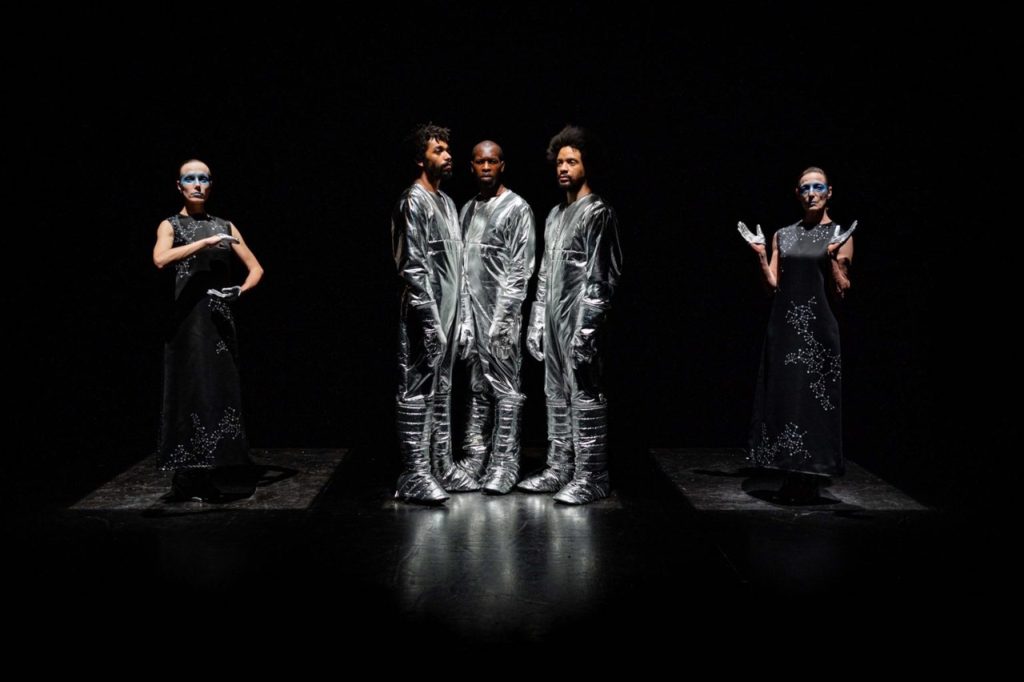
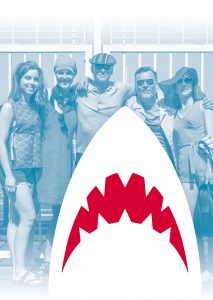 Jaws / Der Weisse Hai captures the aura of a turning point in history – the mid 1970s – and transforms the film’s images, its music, its evocative qualities into a long overdue conversation with a cultural icon. By examining the (then) critical content and (dwindling) relevance of Steven Spielberg’s 1975 movie Jaws we’re dancing and performing an entertaining and critical new look at this mega blockbuster (in fact, the first one of the so called “blockbuster era” of Hollywood movies).
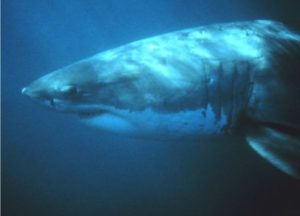 Spielberg’s Jaws is a striking example of a cultural turning point: Just when the so-called counterculture seemed to finally dominate, preparations for a new era began. The names Thatcher, Reagan and Kohl and the economic terms neoliberalism, deregulation and privatization brought traditional values back to the fore and countered the ideas of counterculture. After ten years of youthful optimism, but also mistrust, defeat and fear – Nixon and Watergate; defeat in the Vietnam War, the oil crisis and economic decline – Jaws showed a society banding together in the face of a grave threat, recalling its old values and again producing heroes from its midst.