etb English
Theatre
Berlin
International Performing Arts Center


Blog Archive

Designer Jeans Genes

Biopolitical scenarios from a terribly blessed future

Will synthetic biology provide us with ”improved” children, never-seen-before pets and ideal partners? Will we no longer accept our naturally-given characteristics, but rather enhance ourselves to become an ideal version of ourselves to reach our goals in life? Will the genetically engineered, beautified and improved half of humanity rule, while the other not so fortunate (or rich) half serves? Will we be able to eradicate deadly genetic diseases?

The answers to these and similar questions will come not in some distant utopia, but within our lifetimes. There will be unpredictable social consequences and challenges that our children will soon have to deal with. In the Science&Theatre school project ‘Designer Jeans Genes‘, some of them are already starting today!

The project was part of SCIENCE & THEATRE 2012 and consisted of performances and an exhibition exploring synthetic biology, developed by students of Heinrich-Schliemann-Gymnasium, Humboldt-Gymnasium, and Leibniz-Schule.
supported  by    Kulturprojekte Berlin_Logo_100pixbreit     fu_logo_150

The exhibition on genetic experiments and artistic studies of the DNA as well as ethical viewpoints on the subject by students of the three schools opens on February 6 at 6pm and is open on performance days one hour before showtime until March 10th.

„Vielen Dank für dieses Erlebnis! Es sollte viel mehr solche Projekte geben die den Schülern nicht nur Englisch und Schauspielern beibringen, sondern sie auch noch mit einem so komplexen Thema vertraut machen. Die Debatte über die Gentechnik ist ideologisch so aufgeladen und die Vorurteile in den Köpfen sind so festgefahren, dass es mich sehr verblüfft hat mit welcher Offenheit und Sachlichkeit die Schüler an dieses Thema herangegangen sind. Aus dieser Offenheit kamen sehr phantasievolle und interessante Ansätze die mich wirklich begeistert haben. Solche Erfolge haben wir mit vielen Jahren Aufklärung in Schulen nicht erreicht! Euch ist es gelungen, die Wissenschaft zum Thema der Schüler zu machen und nicht zu einem Lehrfach in der Schule. Ich wäre sehr froh, wenn man so etwas auch für die Grüne Gentechnik machen könnte.“ – Inge Broer, Professorin für Agrobiotechnologie und Begleitforschung zur Bio- und Gentechnologie, Agrar-und umweltwissenschaftliche Fakultät, Universität Rostock

Photograph 51

by ANNA ZIEGLER

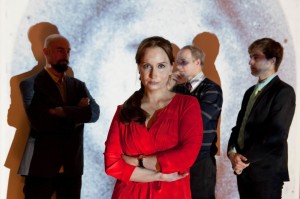
Photograph51_Bau_01_c_RGBA science play about a revolutionary discovery – and how the boys took over

In the early 1950s the young Jewish scientist Rosalind Franklin had to struggle with a frustratingly male-dominated science establishment at King´s College in London. Some of her colleagues even refused to acknowledge her doctoral title, while access to the faculty club, which was reserved to men, remained denied to her.

After months of work, she succeeded in taking the X-ray photograph that became the turning point for elucidating the DNA double helical structure: photograph 51. However, the credit for this revolutionary scientific discovery was given to the men who used the picture without her knowledge; Franklin´s crucial contribution went unacknowledged for decades.

When James Watson, Francis Crick and Franklin´s colleague Maurice Wilkins received the Nobel prize in 1962, she had been dead for four years.

English Theatre Berlin; PHOTOGRAPH 51In a nutshell, Anna Ziegler‘s play shows the making of an outstanding scientific discovery in a bone-dry, ritualized and women-excluding male establishment, in which an emotional minefield, social coldness and hierarchies, antisemitism and ferocious fighting for recognition and scientific priority went hand-in-hand with scientific curiosity, meticulousness and juvenile enthusiasm. (in 1952, James Watson was just 24 years old, Rosalind Franklin was 32 !).

Photograph 51 was the third production in our Science & Theatre program.

Supported by   Druck  fu_logo_150

Image: Magnus Hengge / Photos: Christian Jungeblodt


Lady Lay

a new play by LYDIA STRYK

“I´ll let you be in my dreams if I can be in yours.”

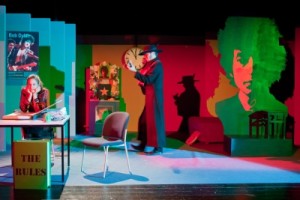
English Theatre Berlin > LADY LAYMarianne has worked at the Berliner Arbeitsamt all her life and then she hears Bob Dylan on the radio and the Wall falls down.

Although she can hardly understand the words, she takes a journey—both joyful and terrifying—into Dylan’s world, putting her very existence in jeopardy.

“There must be some way out of here …”

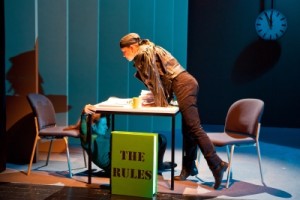
“Welcome to the Office of Employment. Berlin Division, District Seven. It is run as an efficient operation. And it is. It’s a system, after all. It could run without us. Maybe it will one day. It has rules. But behind the rules is reality. And no two things could be more opposite. Rule: You must work. Reality: There is no work. Rule: We provide work. Reality: there is no work. Rule: Our economy and survival depend on work. Reality: there is no work. Not here. Not any more.”

Lady Lay takes a joy ride through life’s rules and regulations. But what is freedom? And can Bob Dylan take you there?
A joy ride through the Arbeitsamt to Freedom!

“Yippee! I’m a poet, and I know it. Hope I don’t blow it.”

English Theatre Berlin > LADY LAYLydia Stryk was born in DeKalb, Illinois, birthplace of barbed wire and is now based in Berlin. She is the author of over a dozen full-length plays including Monte Carlo, The House of Lily, The Glamour House, American Tet and An Accident, which have been part of festivals around the United States and produced at, among others, Denver Center Theatre, Steppenwolf Theatre Company, Victory Gardens, HB Studios, The Contemporary American Theatre Festival, Magic Theatre, and in Germany at Schauspiel Essen, Theaterhaus Stuttgart and Forum Theater with Schauspiel Independent and featured at Biennale Bonn. Her plays are published by Broadway Play Publishing and Per Lauke Verlag, and excerpts appear in numerous anthologies including Acts of War: Iraq and Afghanistan in Seven Plays from Northwestern University Press. American Tet was produced at the English Theatre Berlin in November 2008.

Photos by Christian Jungeblodt

My Romantic History

by D C JACKSON

MRH_Web

“I suppose there comes a point when you have to face that you’re just ‘that age’ and that if you’ve got a man who isn’t a retard, a rapist or a Rangers supporter then he’s probably about the best you’re going to get.”

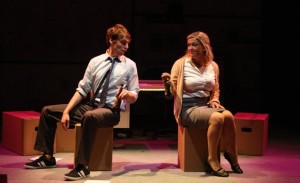
My Romantic History takes a sharp, hilarious and affectionate look at modern relationships and the rocky road to true love. Office colleagues Tom and Amy´s drunken one-night stand seems to be morphing into a full-blown relationship before their very eyes, but before they can face the future, they’ll have to deal with the ghosts of relationships past…

“The genius of this play is that it acknowledges the ambivalence of postmodern sexual lives – the lack of commitment, the coldness, the sense that reality never quite measures up to some plastic ideal – while simultaneously overcoming all that with the wit, the humanity, the ability to laugh, learn, and move on, that is the real redeeming quality of our species. Jackson’s clear-eyed but brilliant comic invention is a joy, as is his inimitable way with words.” The Scotsman

MRH2_web
First produced by The Bush Theatre and Sheffield Theatres in association with Birmingham Repertory Theatre on 5th August 2010 at the Traverse Theatre Edinburgh.

D. C. JACKSON is a Glasgow-based writer. His plays include The Wall (2008), The Ducky (2009) and The Chooky Brae (2010), a trilogy of plays written for Borderline Theatre, Glasgow); Company Policy (2010), Out on the Wing (2008), Matinee Idle (2006) and Drawing Bored (2006), all for the A Play, A Pie and A Pint series at Oran Mor, Glasgow. He has written for BBC Radio Scotland and Radio 4. He is currently under commission to the Royal Court Theatre and the National Theatre of Scotland.

Image: Anna Clark / Photo: Peter Groth

supported by  British CouncilNEW_BLLUE_180breit

Summer and Smoke

by Tennessee Williams
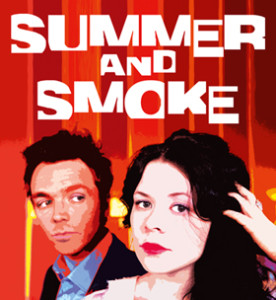
SummerandSmoke_image02_280They were two ill-starred lovers: a minister´s shy, sensitive daughter and a wildly passionate, carefree young doctor. One hungered for the spirit, the other hungered for the flesh…

Alma: There are some women who turn a possibly beautiful thing into something no better than the coupling of beasts – but love is what you bring to it. Some people bring just their bodies. But there are some people, there are some women, John who can bring their hearts to it, also – who can bring their souls to it!

John: Souls again, huh – those gothic cathedrals you dream of. Your name is Alma and Alma is Spanish for soul. Some time I´d like to show you a chart of the human anatomy that I have in my office. It shows what your insides are like, and maybe you can show me where the beautiful soul is located on the chart.

On 6 October 1948, Summer and Smoke premiered at the Music Box Theater, New York. In 1952, Geraldine Page played the lead role in a revival at the newly founded Circle in the Square Theatre in downtown New York. Her legendary performance is credited with the beginning of the Off-Broadway movement.

Summer and Smoke - English Theatre Berlin

To celebrate the 100th anniversary of Tennessee Williams´ birthday English Theatre Berlin presents a production of his classic, Summer and Smoke, directed by Blake Robison, Artistic Director at Round House Theatre, Washington/DC.

Thomas Lanier “Tennessee” Williams was born on March 26, 1911 in Columbus, Mississippi. The second of three children, his family life was full of tension. His parents, a shoe salesman and the daughter of a minister, often engaged in violent arguments that frightened his sister Rose.

In 1927, Williams got his first taste of literary fame when he took third place in a national essay contest sponsored by The Smart Set magazine. In 1929, he was admitted to the University of Missouri where he saw a production of Henrik Ibsen´s Ghosts and decided to become a playwright. But his degree was interrupted when his father forced him to withdraw from college and work at the International Shoe Company. Eventually, Tom returned to school. In 1937, he had two of his plays produced by Mummers of St. Louis, and in 1938, he graduated from the University of Iowa. After failing to find work in Chicago, he moved to New Orleans and changed his name from “Tom” to “Tennessee” which was the state of his father’s birth.
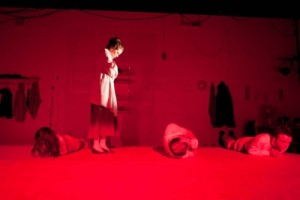
Summer and Smoke - English Theatre BerlinIn 1939, the young playwright received a $1,000 Rockefeller Grant, and a year later, Battle of Angels was produced in Boston. After moving from St. Louis to New Orleans in 1939, he adopted “Tennessee Williams” as his professional name. In 1944, what many consider to be his best play, The Glass Menagerie, had a very successful run in Chicago and a year later burst its way onto Broadway.

Williams followed up with several other Broadway hits including such plays as A Streetcar Named Desire, Summer and Smoke, A Rose Tattoo, and Camino Real. He received his first Pulitzer Prize in 1948 for A Streetcar Named Desire, and reached an even larger world-wide audience in 1950 and 1951 when The Glass Menagerie and A Streetcar Named Desire were made into motion pictures. Later plays which were also made into movies include Cat on a Hot Tin Roof (for which he earned a second Pulitzer Prize in 1955), Orpheus Descending, and Night of the Iguana.

On February 24, 1983, Tennessee Williams choked to death on a bottle cap at his New York City residence at the Hotel Elysee. He is buried in St. Louis, Missouri. In addition to twenty-five full length plays, Williams wrote dozens of short plays and screenplays, two novels, a novella, sixty short stories, over one-hundred poems and an autobiography.

pics: Christian Jungeblodt

Brave Near World

10-Minute Play Competition 2011 on the theme UTOPIA/DYSTOPIA

10mp2011_websiteWhat will life be like for children being born today? Will they see Prenzlauer Berg become a gated community? Will Mandela’s legacy cause South Africa to be the new model for civilization?
Will genetically modified tomatoes officially become animals and start appearing in zoos? Will our technological fetishes ever actually save us more time than they cost us?

The winners were:

Indecent Exposure by Tamsin K. Walker

Poor by Nicole Paschal

Three Grams of Spacebox by Oliver Ralli

Nice Woolly Cardigans by Mark Daver

The Connection by Joshua Crone

An Experiment with an air pump

by SHELAGH STEPHENSON

20101214JU6573_S01Y_sA social drama, a science play, a thriller
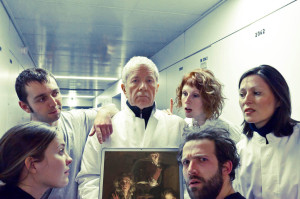
Something revolutionary is happening at the Fenwicks’, while there’s trouble in the air at Ellen and Tom’s. Fenwick is taking science to dizzying heights, his assistant is after the maid and a mob is rioting at the front door. Ellen, a geneticist, has moral qualms about a job offer and Tom is unemployed. The Fenwicks are living in 1799, Ellen and Tom in 1999 – in the same house. There’s a body in the basement. Who buried it there 200 years ago?

Shelagh Stephenson explores the question of how much morality science can take – and how much it needs – with two compelling examples from two different times in history. To what lengths should the study of anatomy go to procure cadavers at the end of the 18th century? And how far should genetics go at the beginning of the 21st century?

What is good and what is evil science? Shelagh Stephenson projects this question further back in time than most do. Academic debate on the ethical limits to scientific research often focuses on the atomic bomb and unscrupulous Nazi researchers. However, the long period in which body snatching was commonplace for the study of anatomy goes back 150 years before then and is a dark chapter in the history of colonial England between Newton and Darwin.
Modern genetics is constantly forced to deal with the heatedly debated social relevance of its work and results. Genomic research will soon be able to decode our entire genetic make-up at little expense. Will we soon find out in the neighbourhood “Gene Shop” that we are particularly susceptible to alcoholism, cancer, or Alzheimer? Is that something to take seriously? And is it something that we want to know? Who else might want to know, and why?

An Experiment With an Air Pump was the second production in our Science & Theatre program.

Supported by   Druck  fu_logo_150

Shelagh Stephenson was born in Northumberland and read drama at Manchester University. Her first play, The Memory of Water (1995) was a huge success and won her an Olivier Award for Best Comedy; her second one, An Experiment with an Air Pump (1998) was equally sucessful and won the Peggy Ramsay Memorial Award. Other plays are Ancient Lights (2000), Mappa Mundi (2002), and Enlightenment (2005). Her latest one is A Northern Odyssey (2010) about American painter Winslow Homer´s two-year visit to Northumberland in the early 1880s. She has also written numerous radio plays and TV scripts. The Memory of Water was made into a film called Before You Go (2002) starring Julie Walters and Tom Wilkinson and directed by Lewis Gilbert.

 pics: Christian Jungeblodt

Private Fears in Public Places

by Alan Ayckbourn

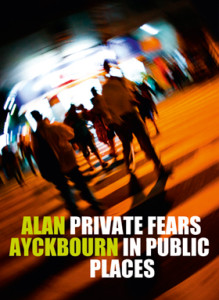
privatefears280_image02Six people in a big city. All of them are in search of a home, a niche or a relationship.
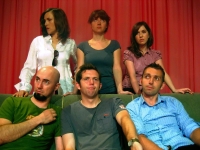
No catastrophes take place, and no one is evil, yet they all fail in their quest and eventually end up alone. That´s just how it is – shit happens. A chain of wasted chances – a comedy of failures.

For example: the first meeting of an internet date starts out embarrassingly – and ends in desaster. The longer the evening, the more alcohol gets drunk, and the sadder and more touching the meeting becomes. The very next day Dan, flowers in hand, goes to meet her again in a café. His former girl friend happens to be sitting in the same café and as they greet each other, his date misconstrues their tête-à-tête and walks away, disillusioned.

“Any idiot can face a crisis. It’s the day-to-day living that wears you out.”  Anton Chekhov

PrivateFearsGruppeFarbeIn fifty-four scenes – some of them just short clips – Alan Ayckbourn masterfully creates an atmosphere of exquisite melancholy and grotesque failure. His sympathetic view of the characters keeps schadenfreude and black humour at bay and instead makes us grin at the all-too-familiar situations from our own lives. With a keen humane eye, Ayckbourn finds a universal language for the impossible dream of fulfilled desires.
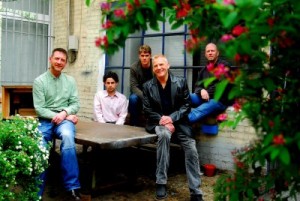
For his cinematic adaptation of the play, French director Alain Resnais transferred the story to Paris and through the title Coeurs offers a very simple idea of what the play is all about: the hearts are beating but the rhythm isn´t quite right….

We present the play in its English-language original and set it in Berlin as the new international metropolis – whose neuroses, however, remain global.privatefearsgruppefarbe

“In all this, nothing is ever wholly tragic or totally comical. The comedy, like the intelligent directing, remains unflustered, unagitated. The characters’ loneliness and their lamentable failure in matters of love require no dramatic embellishment. It’s no more than is to be expected in the life of a typical big-city single. Yet the acting is so close to life itself that one develops a real affection for this sextet and feels sad to have to leave them after 100 minutes in their company.” Berliner Morgenpost

Bei mir bist du Strange

English Theatre Berlin’s first ever 10-minute play competition was on the theme ENGLISH IN DAILY GERMAN LIFE:

You can hardly overestimate the influence the English language has in German life today: in public spaces, on the street, over the internet and on TV.

But – what influence does English have on the way we live our daily lives? How can Grandma Erna possibly understand what she see in shop windows? Does Coffee To Go really come from Togo? And what about the confusion native English speakers experience when they see words used that apparently are English but which make absolutely no sense to them?

The winners:

WIRECENTER

In Other Words by Joshua Crone

The Exam by Joshua S. Horowitz

Ten Minutes with Günther by Sonny Hayes

Bombay an der Spree by Kevin McAleer

Hooray for Hollywood by Rich Rubin

Photo: Doris Spiekermann-Klaas/DerTagesspiegel

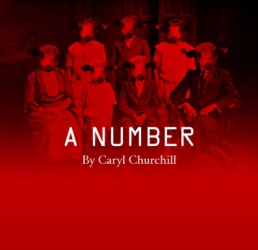
A Number

by Caryl Churchill

a-number-rot“Walk round the corner and see yourself you could get a heart attack. Because if that´s me over there who am I?”
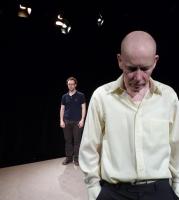
A man uses his money to commission a clone: his contractors seize their chance to create twenty more. The talk is of paternal love, and of science, and of good intentions. But who will have to live with the consequences? And who will have to die?

“A taut, chilling two-man work about a desperate father who seeks to duplicate his lost son” – “enormously powerful” – “outstandingly well acted and staged” – “real and truthful in every moment” – “a maelstrom of deep, dark emotions laced with subtle sarcasm and ending with a hint of hope” – “an absolute must-see” – “Science&Theatre, a successful coproduction” (from the reviews in ExBerliner, Die Zeit Online, Neues Deutschland)

anumber-homepageCaryl Churchill’s compelling thought-experiment has a single, simple premise: humans have been cloned. In one hour of ferociously intense tragicomedy, she digs down to the roots of personal identity, exposing the hard but brittle bond between fathers and sons and the ultimate cost of evasion. The past can be buried, but it won’t stay down.


A Number was the first production in English Theatre Berlin´s  Science & Theatre program.

Supported by

fu_logo_150