etb English
Theatre
Berlin
International Performing Arts Center


Blog Archive

Martina J. Kohl

Family Matters follows the traces of a German family that, over generations, continues to cross the Atlantic in both directions. Like Elizabeth and Little Henry who, at the beginning of the 20th century, are forced to leave their beloved New York to return to the old country; the violinist Clara who can only live her passion for music in the America of the suffragettes; the war bride Toni, who courageously follows a G.I. to Nebraska after World War II; and, finally, the student Iris who is trying to find her place in both worlds in the 1980s. Looking back, they all ask the same question: “What if . . .?” What if they had not gone to America, or back to the old country? If they had not fallen in love? What if they had taken that other road and pursued their dreams a bit more forcefully?

Family Matters takes ordinary, yet memorable characters out of the yellowed pictures in the photo albums, gives them a voice and places them in their own time. Martina J. Kohl revives the past. She shows that today cannot be understood without the yesterday. And that migration, uprooting and the search for belonging are universal themes.

Martina J. Kohl worked in the Cultural Section of the U.S. Embassy in Berlin for many years where she developed and organized numerous programs. She especially loved the Literature Series that she coordinated with the English Theatre Berlin | International Performing Arts Center featuring established and up-and-coming American writers. Writing has been a passion ever since she taught at the University of Michigan. It is part of her seminars that she teaches regularly at Humboldt University Berlin and defined her work as editor of the American Studies Journal. As an advisory board member of the Salzburg Global American Studies Program, she continues to engage in transatlantic dialogue. Among her academic publications, Family Matters is her first book-length fictional work that is published in English and German. Born in the Rheingau region, she lives with her family in Berlin. martinajkohl.com

Publisher: PalmArtPress Berlin for FAMILY MATTERS. Of Life in Two Worlds / FAMILY MATTERS. Vom Leben in zwei Welten (2023)

Susan Bernofsky

SUSAN BERNOFSKY – INAUGURAL PUBLIC LECTURE / Öffentliche Antrittsvorlesung:

„Alchimistische Transmutation“ und andere Geheimnisse der Übersetzung, mit besonderer Berücksichtigung von Thomas Manns Der Zauberberg

The US-American author and translator Susan Bernofsky will hold the August Wilhelm von Schlegel Visiting Professorship for Poetics of Translation in the summer semester of 2023. The Visiting Professorship, established by the German Translator Fund and Freie Universität Berlin in 2007, is the first professorship for the poetics of translation in the German-speaking world and is established annually at the Peter Szondi Institute for General and Comparative Literature.

Susan Bernofsky studied comparative literature at Princeton University and creative writing in Washington. Since 1993 she has been a translator of German-language literature, both of classics such as Thomas Mann, Franz Kafka and Robert Walser and of contemporary authors such as Jenny Erpenbeck, Yoko Tawada and Uljana Wolf. She has received many awards for her translations, including the Helen and Kurt Wolff Translator’s Prize in 2006 and the Warwick Prize for Women in Translation in 2017. In 2020, she was a Berlin Prize Fellow of the American Academy for her work on a new translation of Thomas Mann’s Zauberberg. Susan Bernofsky chaired the Translation Committee of the PEN American Center in New York, served on the board of the American Literary Translators Association, and curated the “Festival Neue Literatur” for three years, introducing German-language authors to a New York audience. A professor of creative writing at Columbia University in New York, she directs the Literary Translation Program.

“Poetics of Translation” – the ambitious title of the visiting professorship at Freie Universität says it all. Since its inception, the professorship has established itself as an exposed site for historical reflection on the methods and theories of literary translation and the relevance of translation to literary and cultural history. This includes critical reflection on its own and other translators’ methods as well as comparative textual analysis. August Wilhelm von Schlegel, the patron saint of the professorship, symbolizes the poetological claim of translation: His work combines philological research, his own poetry, and literary translation. Not least his translations from ancient Indian (Bhagavad-Gita), Italian (Dante), Spanish (Calderón, Cervantes) and English (Shakespeare) make him a key figure in literary theory as translation theory.


SUSAN BERNOFSKY | Öffentliche Antrittsvorlesung

Die amerikanische Autorin und Übersetzerin Susan Bernofsky wird im Sommersemester 2023 die August-Wilhelm-von-Schlegel-Gastprofessur für Poetik der Übersetzung bekleiden. Die vom Deutschen Übersetzerfonds und der Freien Universität Berlin 2007 ins Leben gerufene Gastprofessur ist die erste Professur für Poetik der Übersetzung im deutschsprachigen Raum und wird jährlich am Peter Szondi-Institut für Allgemeine und Vergleichende Literaturwissenschaft eingerichtet.

Susan Bernofsky studierte Komparatistik an der Princeton University und Kreatives Schreiben in Washington. Seit 1993 ist sie Übersetzerin deutschsprachiger Literatur, sowohl von Klassikern wie Thomas Mann, Franz Kafka und Robert Walser als auch von Gegenwartsautorinnen wie Jenny Erpenbeck, Yoko Tawada und Uljana Wolf. Für ihre Übersetzungen wurde sie mit vielen Preisen ausgezeichnet, u.a. mit dem Helen und Kurt Wolff Translator’s Prize 2006 und dem Warwick Prize for Women in Translation 2017. 2020 war sie Berlin Prize Fellow der American Academy für die Arbeit an der Neuübersetzung von Thomas Manns Zauberberg. Susan Bernofsky leitete das Translation Committee des PEN American Centers in New York, engagierte sich im Vorstand der American Literary Translators Association und kuratierte drei Jahre lang das „Festival Neue Literatur“, das deutschsprachige Autor·innen einem New Yorker Publikum vorstellt. Als Professorin für Kreatives Schreiben an der Columbia University in New York leitet sie das Programm für Literarisches Übersetzen.

„Poetik der Übersetzung“ – der anspruchsvolle Titel der Gastprofessur an der Freien Universität ist Programm. Seit ihrer Einrichtung hat sich die Professur als exponierter Ort der historischen Reflexion von Methoden und Theorien literarischen Übersetzens und der literatur- und kulturgeschichtlichen Relevanz des Übersetzens etabliert. Das schließt die kritische Reflexion eigener und fremder Übersetzungsmethoden ebenso ein wie die vergleichende Textanalyse. August Wilhelm von Schlegel symbolisiert als Namenspatron der Professur den poetologischen Anspruch des Übersetzens: In seinem Schaffen verbinden sich philologische Forschung, eigene Dichtung und literarische Übersetzung miteinander. Nicht zuletzt seine Übersetzungen aus dem Altindischen (Bhagavad-Gita), dem Italienischen (Dante), dem Spanischen (Calderón, Cervantes) und dem Englischen (Shakespeare) machen ihn zu einer Schlüsselfigur der Literaturtheorie als Translationstheorie.


Photo: Caroline White


Drama Panorama #3 – New Translations of International Drama

New Translations of International Drama

In nine readings from nine countries over three days, Drama Panorama: Forum for Translation and Theater e. V. will present staged readings and panel discussions that showcase the work of theater translators with its particularities and challenges along with new international plays and their cultural contexts.

With this festival of staged readings, Drama Panorama will present theater cultures that are usually underrepresented on German-speaking stages, introduce new plays from Central and Eastern Europe (Hungary, Poland, Czech Republic, Ukraine), Israel, Cuba and Guinea-Bissau, and explore current issues in Portugal and the United Kingdom.

Each reading will provide an introduction to the country’s drama and theater community as well as the work of translation, which often goes beyond language transfer itself, in discussion with international dramatists and other guests.

Staged reading and talks take place every day on May 26, 27 and 28 at 3pm, 5pm and 8pm

You can reserve tickets, find an overview of the schedule and more information about the event at drama-panorama.com

Please note that this event is in German.

Friday,  May 26, 2023

3pm
Hungary: Trapped in the Patriarchy
István Tasnádi: Kartonpapa 
Translated from the Hungarian Marianne Behrmann

5pm
Ukraine: Journey Through a Country Torn Apart
Anastasiia Kosodii: Timetraveller’s Guide to Donbas
Translated from the Ukrainian by Lydia Nagel

8pm
Poland: A Bitter Pandemic Commedia dell’Arte
Ishbel Szatrawska: Totentanz. Schwarze Nacht, schwarzer Tod
Translated from the Polish by Andreas Volk

Saturday, May 27, 2023

3pm
Czech Republic: Out of the System – Shadow Economy Workers
Tomáš Ráliš: Sorex
Translated from the Czech by Maira Neubert

5pm
Israel: At the Boundaries of Humanity – Drama in Times of Catastrophe
Maya Arad Yasur: Triage
Translated from the Hebrew by Matthias Naumann
This talk will be held in English

8pm
United Kingdom: Drama and Climate
Dawn King: Das Tribunal
Translated from the English by Henning Bochert
This talk will be held in English

Sunday, May 28, 2023

3pm
Guinea-Bissau: Decolonising Thinking
Abdulai Sila: Zwei Schüsse und ein Lachen
Translated from the Portuguese by Renate Heß

5pm
Portugal: The Media in the Post-Fact Era
Rui Cardoso Martins: Neueste Nachrichten
Translated from the Portuguese by Niki Graça

8pm
Cuba: Water Rising on all Sides – The Present in the Theatre and on the Streets
Yunior García Aguilera: Jacuzzi
Translated from the Spanish by Miriam Denger

Funded by the Deutscher Übersetzerfonds and the Federal Government Commissioner for Culture and the Media as part of the NEUSTART KULTUR programme. The translation of the Czech play Sorex by Tomáš Ráliš was funded by the Academy of Performing Arts in Prague.
 

Transatlantica

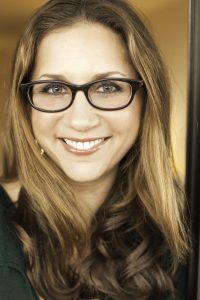
Through an autobiographical reappraisal of choreographer Caroline Alves’ family history, the solo performance Transatlantica delves into the voids between Brazil and Europe, between past and present.

It is one among many family histories that are marked by settler colonialism in Brazil: histories based on the erasure of indigenous ancestors, carrying colonial continuities into the present. Following the traces of Senhorinha, the indigenous great-great-grandmother of whom only the colonial name remains, Caroline Alves explores the violent nexus of patriarchy and colonialism.

Transatlantica interweaves dance and storytelling, atmospherically oscillating between the elements of the stage set: the crystalline cold of a block of ice and the spreading, reflecting water that connects the continents. With tenderness and rage, Caroline Alves confronts her ancestral history and present, searching in the voids of the “official narrative” for the place from which to speak with her own words and movements that may break with the vast silence.

Second Class Queer

Actor and writer Kumar Muniandy questions his identity, queerness, internalized homophobia and experiences of racism with his play. In the midst of these terms and their politics, Kumar seeks his own truth.

Is it possible to live as a brown gay man in Germany and find healing while carrying the weight of oppression from his motherland? Set in a speed-dating event, will Kumar’s leading man, Krishna, win the role he wants in this audition for love?

Through the lens of his experience as a Tamil-Malaysian queer person living in Berlin, Kumar Muniandy has developed a theater piece that investigates the connections between internalized homophobia that stems from anti-homosexuality laws of the colonial era and the structural racism he experiences.

What are the consequences of such merciless neocolonialism for the mental health of queer minorities living in Germany today? After all, Krishna, like Kumar, is on a pursuit of forgiveness and self acceptance.

Second Class Queer is dedicated to Nhaveen.

Following a work-in-progress presentation as part of the 2022 Expo Festival, we are thrilled to offer additional performance of the finished version of this production.

Parataxe – International Literature

Dinara Rasulewa and Tomer Dotan-Dreyfus

What languages does Berlin write in? In varying locations, PARATAXE regularly invites Berlin authors, who pen their work in languages other than German, to take part in conversations, readings and new translations.

Multilingual live talks and readings by the poet Dinara Rasuleva (together with her translator Peggy Lohse) and the writer Tomer Dotan-Dreyfus.

An evening in German with some English, Hebrew, Russian and Tatar – and with literary translations into German. Hosted by Martin Jankowski.

PARATAXE is a project of the Berliner Literarische Aktion e.V. and is supported by Berlin’s Senate Department for Culture and Europe. Further information can be found at www.stadtsprachen.de.

Where Do Novels Come From?

The U.S. Embassy Literature Series: Where Do Novels Come From? About Writing and Creativity

Lauren Groff and Lorrie Moore in Conversation with Gregor Dotzauer

Lauren Groff is the ELLEN MARIA GORRISSEN FELLOW – CLASS OF SPRING 2023 at the American Academy in Berlin. She is the author of six books of fiction, the most recent the novel MATRIX (September 2021). Her work has won The Story Prize, the ABA Indies’ Choice Award and France’s Grand Prix de l’Héroïne, was a three-time finalist for the National Book Award for Fiction and twice for the Kirkus Prize and was shortlisted for the National Book Critics Circle Prize, the Southern Book Prize and the Los Angeles Times Prize. She has received fellowships from the Guggenheim Foundation and the Radcliffe Institute for Advanced Study and was named one of Granta’s Best of Young American Novelists. Her work has been translated into over thirty languages. She lives in Gainesville, Florida.

Lorrie Moore is currently the MARY ELLEN VON DER HEYDEN FELLOW IN FICTION – CLASS OF SPRING 2023 at the American Academy in Berlin. She is the Gertrude Conaway Vanderbilt Professor of English and Creative Writing at Vanderbilt University. She is the author of two short story collections, three novels and a children’s novel. Her new novel I Am Homeless If This Is Not My Home (June 2023) has been listed as one of the most anticipated books of 2023 by Time Magazine. Lorrie Moore has won numerous awards such as the O. Henry Award, The Irish Times International Fiction Prize, the Rea Award for the Short Story, and the PEN/Malamud Award for Short Fiction.  She has been a finalist for the Orange Prize, The PEN Faulkner Award, The National Book Critics’ Circle Award, The Story Prize and the Frank O’Connor International Short Story Award. See What Can Be Done (Alfred A. Knopf, 2018) is a collection of her reviews and essays that previously appeared in publications such as The New York Review of Books, The New Yorker, The Yale Review and The Atlantic. A recipient of an NEA, a Guggenheim Fellowship, a Lannan Fellowship, the Berlin Prize and a Pushcart Prize, she was elected to the American Academy of Arts and Sciences in 2001 and to the American Academy of Arts and Letters in 2006.

Gregor Dotzauer is lead editor for nonfiction at Berlin’s Tagesspiegel.  He studied German, philosophy and musicology in Würzburg and Frankfurt am Main before beginning to write about literature and film for the Frankfurter Allgemeine Zeitung, Die Zeit and the Süddeutsche Zeitung. In 1999, he joined Berlin’s Tagesspiegel as literary editor, where he also regularly writes on topics related to jazz or the humanities. In 2009, he received the Alfred Kerr Prize for Literary Criticism. In October 2022, Matthes & Seitz published his literary essay “Schläft ein Lied in allen Dingen – Über Musik, Moment und Erinnerung” (A Song Sleeps In All Things – On Music, Moment and Memory).

The Berlin Diaries

The great-grandfather of Oregon Book Award-winning playwright Andrea Stolowitz kept a journal for his descendants after escaping to New York City in 1939 as a German Jew.

Following the complicated lure of genealogy, Stolowitz goes back to Berlin to bring the story of her unknown ancestors out of the archives into the light. The record keeps as many secrets as it shares; how do people become verschollen, lost, like library books?

A limited number of free tickets have been reserved for secondary school student groups and their teachers. Please register as soon as possible by email at tickets@etberlin.de

This production is part of the 2023 Berlin Performing Arts Festival, May 31 to June 3, 2023 | paf.berlin


Complete funding for this production and the 2022 performances was generously provided by the U.S. Embassy in Berlin.


These additional performances in 2023 have been made possible thank to the Wiederaufnahmeförderung program of Fonds Darstellende Künste
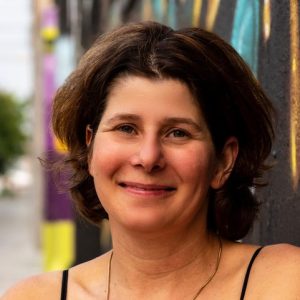


Andrea Stolowitz is a German/American playwright currently living and working in Cork, Ireland. Her work embraces bold theatricality ranging from intimate portrayals of the human condition to the intersection of national history on private lives. Andrea is a member of New Dramatists class of 2026, an alumna of The Playwrights’ Center, and a collaborating writer with the internationally lauded devised theater company Hand2Mouth Theatre. Andrea is the Lacroute Playwright-in-Residence at Artists Repertory Theater. Andrea has taught at Duke University, NYU, UC-San Diego, Willamette University and NUI-Galway.

Impro 2023

IMPRO is Europe’s largest showcase for improvised theater!

For the 2023 edition, English Theatre Berlin | International Performing Arts Center will host Batovia:

When coming to Batovia, be aware that this land leaves no one untouched. The merciless struggle for power, the unquenched longing for love, the permanent flare-up of strife and hatred – you can’t escape it. William Shakespeare would have enjoyed these dramas that will captivate and draw you in. No one knows today how they will begin and how they will end – in this country that lies in yesterday, today and tomorrow, in the distance and right beside you.


We Can Do It Moaning (ABA NAIA)

What should we use our mouths for? Just for eating? Shouldn’t we also use them for kissing, licking, sucking and moaning?

Let’s send in these post-porn clowns and see how far you can go as a woman*! But watch out: It gets dirty. It gets messy. It gets hilarious and physical. It remains embarrassing and complicated. ABA NAIA teach us about moaning and transform sounds into language. They challenge the patriarchy with their vocal chords. You are invited to take part in a dialogue at the crossroads of science and lies, comedy and porn, feminism and lust.


You are currently viewing a placeholder content from Vimeo. To access the actual content, click the button below. Please note that doing so will share data with third-party providers.

More Information