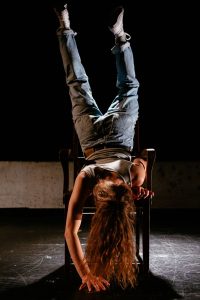
If I can’t dance, it’s not my revolution.
These words, attributed to the anarchist author Emma Goldman, serve as a starting point for the performance and accompany the choreographic investigation of protest and resistance. In what ways does a dancing body become an empowered body and what contradictions may arise from this empowerment? How can individual and collective bodies become resistant through movement? Which narratives and images of resistance linger in our memories and how can they be spoken about and shared?
Inspired by past and present revolts against injustices such as the Gezi Park protests in Turkey, the viral feminist performances of Las Tesis and the anger over the Sewol tragedy in South Korea, History has failed us, but… recounts protest movements from the perspective of queers and people of color – people whose bodies are still read as “Other” and “foreign.” The choreography combines visions of future demonstrations with existing traditional dances, such as the Korean ganggangsullae, which has been danced for centuries by women’s groups during the full moon for catharsis, into an exchange of playful lightness and political urgency.
Throughout the evening, the dancers draw strength from physically activating specific moments, citing powerful poses and creating togetherness in solidarity together with the audience. The dancing bodies thus become a form of non-violent opposition against discrimination and racism and enrich the imagery and ideas of political movements.