by Lydia Stryk
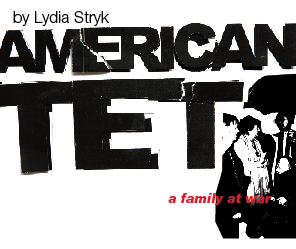 An army family at war …
American Tet enters into the lives and world of a military family, the Krombachers. The father, Jim, served in Vietnam before building a career in the Army; while the son, Danny, currently serves as a military policeman in Iraq. And then there is Elaine, an exemplary military wife and mother – an upright patriot who teaches the spouses of new soldiers the ins and outs of military life.
The family, including the rebellious daughter, Amy, await Danny who is coming home on leave. Danny’s return brings unexpected complications into the black and white world of duty and pride. Coming home, too, is Danny’s friend, Angela, who has been gravely injured in the war. Meanwhile, Elaine encounters a woman from another world, Nhu, – from Vietnam – who unsettles her and sets about the unraveling of her unquestioned assumptions and world.
American Tet is a brutal account of the effect of the current war in Iraq and past wars, on soldiers and soldiers’ families. What´s important? Who is right? How does terror begin and most of all why?
“It’s not a pretty play. But it’s not a pretty world.” Lydia Stryk
“Ein ziemlich beeindruckendes Stück…, das sich keine wohlfeile Moral leistet oder seine Figuren denunziert. (Es) liefert vielmehr eine sehr authentische Zustandsbeschreibung jenes tief verunsicherten US-Amerika, das sich nun Barack Obama zum Präsidenten wählte…” TAZ (Esther Slevogt)
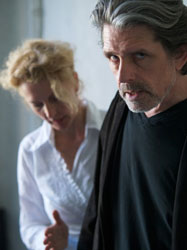 Two River County, a small town in the deep south of the USA, where death, sex and disaster are the topics of everyday gossip, where bigotry and racism are boiling very close to the surface. Here they all sit: Jabe, the dying patriarch and his frustrated wife, Lady; Beulah and Dolly, the town gossips; Carol, the black sheep of the town’s richest family.
 If you saw the two at the cookie counter of a supermarket, you’d probably think: Those two? This delicate hypersensitive-looking young woman obviously dreaming of true love and that swearing wisecracking son of a truckdriver who surely is only looking for some
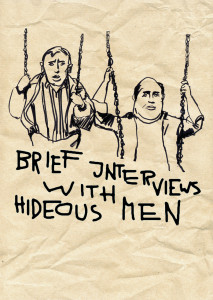 This compilation of dialogues and monologues delves into men´s fear of truly being seen or understood. The loneliness, aggression, and rawness of the characters are laid bare by a series of short interviews conducted by a silent female figure. Movement and visual passages disrupt the text to highlight suppressed motives.


 Fred is dead but he´s not done talking. Anna is fed up with her stinky life in the East. Jens and Andreas are on the look-out for unsuspecting capitalist slobs. Edna is in the bathroom without a clue. The Royal Insults are on their way to fame without a map.