etb English
Theatre
Berlin
International Performing Arts Center


Blog Archive

The White Plague: A Binaural Play

An immersive binaural experience developed from the play The White Plague (created in 2017 and performed in UK and Greece) as a response to the health & safety restrictions imposed in theaters during COVID19.

10 years have passed since a fiercely contagious virus spread among a major city’s population, causing a mysterious white blindness and eventually, society’s collapse. Now five survivors come forward to tell a story they were not allowed to share before. A story of unprepared quarantine facilities and dehumanizing circumstances that drive citizens to expose the very brightest and darkest aspects of their human nature. A story of government negligence, police violence and persevering humanity.

This binaural experience places the audience in the middle of the action as a state-of-the-art sound design transports them to every location of the play and inside every character’s head. A starting point to explore social coherence, gender roles and the survival instincts of a society in crisis.

Noose

… is that day in your life when you see it…

the time slips away…

and all you live is not what you have wished

is the moment when your whole world is shattered

that very moment when your dreams come back asking for all you promised

when you feel it…

the noose is moving up…further and further…it is tightening around your throat…stealing your air…stealing your breath

…because until then you thought you were alive.

A surrealistic performance somewhere in between black comedy and the theater of the absurd. With the use of tabletop puppets and cinematic narration, the puppeteers animate the puppets without being visible to the audience.

2020 EXP(L)O(RE) – Evening 1

A JOURNEY OF DISCOVERY
This format and is dedicated to newcomers, shorter performances and work-in-progress. This year, we are offering four performances over two evenings.

MILKTOOTH | Performance (8:00 pm)

Created and Performed by Promona Sengupta (India)
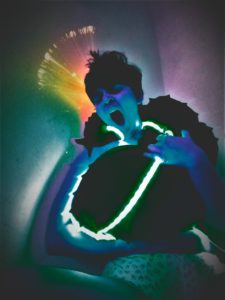
In the not-so-distant future, when interplanetary travel, collaboration and governance is the established order of the day, a young woman on Earth, turning 30, decides to fill the emotional void in her single life by taking part in the intergalactic adoption scheme and becoming a single mom. The catch – her newborn adoptee is a gigantic extraterrestrial child who Earth-dwellers would simply refuse to accept. As they grow old together, mother and child find tenuous ways of communicating, loving, caring and intimacy that take the world by shock and raise violent alarm bells everywhere from the Kita to the playground, until a terrified neighbor calls the authorities.

This is the story of a young single mom trying to save her special-needs-child from being taken away by the intergalactic child services, all the while attempting to love someone who does not fit into the human definition of “lovable”.


THE HORROR WOMAN A.K.A. TOO DARK … TOO SWEET … TOO DEAD? | Dance Film (9:00 pm)

Choreographed and Performed by GᾹZ collective a.k.a. Noga Abramovitch (Israel), Helen Burghardt (Germany) and Zoe Goldstein (United Kingdom)
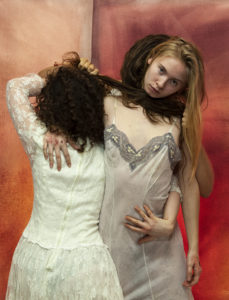
Sitting in a darkened movie theater, hunched up, limbs knotted, hands over faces, three friends wonder how it is that they happen to be seeing yet another horror movie together. It’s that fine, intriguing line between fear-horror-pleasure. This shared visceral experience also raises questions: what’s up with women in horror films? All those beautified helpless victims and sirens with dark powers. Who created them and through whose eyes are we watching? How do we connect, and to what, when these female archetypes bleed across the screen? An unlikely and frightening adventure ensues.

The Horror Woman a.k.a too dark … too sweet … too dead? is a dance horror piece, exploring feminine archetypes and expressions of femininity in horror, the female gaze in horror as well as the translation and transitions between cinematic and stage languages.

The Horror Woman a.k.a. too dark … too sweet … too dead? was developed with support from ADA Studios and Theaterhaus Berlin Mitte.

We Can Do It Moaning (ABA NAIA)

Do you want to know what lies behind the anatomy of our mouths?

ABA NAIA transforms sounds into spoken language. They build their rebellion against the patriarchy with the foundation of human voices. It gets dirty. It gets messy. It gets hilarious. It gets awkward. It gets physical. It gets sexual. It stays complicated. You are invited to a dialogue which takes place at the meeting point between science and a new post-porn soundscape when the seductive power of female tones takes over and makes things move.

You are currently viewing a placeholder content from Vimeo. To access the actual content, click the button below. Please note that doing so will share data with third-party providers.

More Information

Please note that tickets are extremely limited due to the current health and safety regulations. We encourage guests to purchase their tickets as soon as possible.

To attend the performance, you must wear an FFP2 mask and present a negative antigen quick test for COVID-19 that is not older than 24 hours or proof of your complete vaccination or recovery from COVID-19. Please book a test date in advance from an official test center, e.g. www.test-to-go-berlin. Please observe our health and safety measures.

Zugang mit FFP2-Maske und aktuellem negativen Antigen-Schnelltest (nicht älter als 24 Stunden) oder Nachweis des vollständigen Impfschutzes bzw. der Genesung. Bitte buchen Sie vorab eigenständig Ihren verbindlichen Testtermin bei einem offiziellen Testzentrum, bspw. über www.test-to-go.berlin. Bitte beachten Sie unsere Hygiene- und Schutzmaßnahmen.

A Better Life

If you want a better life, you must live a better life.

The performance A Better Life, a co-production from MS Schrittmacher (Berlin) and Brain Store Project (Sofia), deals with the question what a better life can mean and what we do to achieve it.

In European society, moving and being mobile is not only important, but also easier than it was ever before. This gives all European citizens the opportunity to move to a new place if they feel like there can be better options, better living circumstances or sometimes just better weather. We, as individuals, are all responsible to ourselves to live a life that we think is fulfilled and worth living. What would we give up to raise our standards? Are we ready to trade social capital for material capital? What does a good life mean to us and what does even a better life mean to us?

The concept of the performance A Better Life is a result of the research project LUXUS-WEG, funded by the Szenenwechsel (Change of Scene) program of the Robert Bosch Stiftung and a co-production between the performance group MS Schrittmacher from Berlin and ACT Association for Independent Theater from Sofia.

Over the course of this research, the choreographers and performers Martin Stiefermann (Berlin), Iva Sveshtarova and Willy Prager (Sofia) as well as the dramaturg Natalie Baudy (Berlin) have explored the migration patterns of German senior citizens living in old-age poverty going to Bulgaria and young Bulgarians coming to work and study in Germany. The focus lies on the questions of what compromises we make in exchange for a better life and what effects our decisions have on society. What is the motivation for those migration patterns within the EU and what does a better life even mean to us?

To begin, the team met in Sofia where they started their research and made contact with German retirees living in Bulgaria. Afterward, they traveled to Varna, Baltchik, Kavarna and the Golden Beach and talked to female German senior citizens living there about their motivation to start a new life in Bulgaria. They entered into intensive conversation with them, conducted interviews and became acquainted with their living spaces and their everyday lives. In February 2019, a further intensive research phase followed in Berlin, in which a corresponding catalogue of questions was addressed to Bulgarians living in Germany.

2020 Expo Info Abend and Artists Mixer

Calling all Berlin-based performing artists! We’re holding an information night and artists’ mixer for our annual festival! Come by on Wednesday, October 30 beginning at 7pm to meet potential collaborators, see our space and find out everything you need to know to apply to have your work included in the festival! Over the past seven years, numerous Expo productions have been created as a result of artists meeting at the festival’s Info Abend and deciding to make new work together.

Since 2013, this annual festival has presented selected performances from the diverse yet often still undiscovered international independent performing arts community of Berlin with a working language of English. Over six evenings featuring one or two evening-length performances, the festival presents a cross section of this community across all performing arts genres and beyond all language barriers. Within ExpLoRE, the newcomer’s platform, the Sunday afternoon is open to smaller formats or work still under development.

The 2020 schedule of programming will be curated by festival founder Daniel Brunet, Producing Artistic Director of English Theatre Berlin | International Performing Arts Center, as well as choreographer Olivia Hyunsin Kim and theater director Shlomo Lieberman, from the applications received based on the criteria of artistic excellence, internationalism and creative diversity.

The festival accepts proposals both for world premieres as well as restaging of existing productions and provides financial and dramaturgical support. Over the past seven years, numerous Expo productions have been created as a result of artists meeting at the festival’s Info Abend and deciding to make new work together.

The 2020 edition of the festival will be held from April 19 – April 25, 2020.

This year, we’re looking to showcase one or two professional productions by Berlin-based artists each evening from Monday, April 20 through Saturday, April 25. Works should be between approximately 45 and 105 minutes in length.

We can also consider shorter works for performance  during the day on April 19, 2020.

Learn more about the festival and see the lineup from last year right HERE!

Applications for the 2020 Expo are due by midnight on November 30, 2019 and the complete lineup will be announced on or about January 5, 2020.

Born in East Berlin

30 Jahre Mauerfall / The 30th Anniversary of the Fall of the Berlin Wall

A bilingual staged reading (with corresponding subtitles) of a new play by Rogelio Martinez, off-site at Stasi Headquarters, Campus for Democracy in “Haus 22” (Ruschestraße 103 in 10365 Berlin-Lichtenberg)

In 1988, Bruce Springsteen played a legendary concert in East Germany. 300,000 people showed up, making it the largest concert event in the entire history of the German Democratic Republic.

Born in East Berlin explores the ultimate juxtaposition between the freedom of a rock concert and the captivity of an oppressive government during the time of a great historical and cultural shift. Anne, a spirited road manager from the United States, navigates a labyrinth of Stasi bureaucracy and learns how personal their tactics can be. A sly look at the cost of institutionalized dishonesty and the power of rock and roll.

In cooperation with the Stasi Records Agency

Followed by a post-performance discussion with playwright Rogelio Martinez, director Johanna McKeon and Dagmar Hovestädt (Head of Communications for the Federal Commissioner for the Stasi Records [BStU]), moderated by Daniel Brunet

Noraland

“The door to the street slammed shut.”

When Nora left her husband and children to pursue her independence, freeing herself from the doll’s house society placed her in, the door slammed so hard it was heard around the world. 1879, also the year in which the incandescent light bulb entered mass production, witnessed the beginning of a debate about individualism, freedom and self-empowerment that is still being conducted today, 140 years later.

After nearly one-and-half centuries, what has changed? Can this prototypical tale of female emancipation be applied to other demographic groups in the 21st century? What role can Henrik Ibsen’s classic play perform in contemporary society? How can it remain as vital as it was in the 19th century without collapsing into clichés and empty proclamations?

A trio of male performers visits a new country, Noraland, putting on Nora’s words like festive dresses, trying to fill her shoes in a heroic yet ridiculous attempt to follow in those (in)famous footsteps.

Rejection (Dirty Granny Tales)

Rejection, which many believe is Dirty Granny’s most successful production thus far, is performed in a way we have never seen before. The team adds another dimension to the narrative of the story, going down paths they have never dared to take before.

The production is inspired by the life of serial killer Ed Gein, which has prompted the creation of various murderous characters in literature and the cinema, including Norman Bates in Robert Bloch’s Psycho, brought to the screen by Alfred Hitchcock, and Leatherface in Tobe Hooper’s  film The Texas Chainsaw Massacre.

Dirty Granny’s dark tales are a combination of live acoustic music, puppetry, dance and animation projection, strongly influenced by Tim Burton and The Residents, as well as Manos Hadzidakis, David Bowie, Black Metal and progressive psychedelic rock. They also feature contemporary dance involving dolls and movement in costumes, somewhat reminiscent of Japanese gothic theater.

The story describes the relationship between an authoritarian mother and her son. A mother who didn’t allow her child to feel love from anyone but herself. A child whose only contact with the outside world was through a small window. A child for whom other childrens’ games and smiles always remained inaccessible. His deprived childhood turned him into a repulsive creature and his rejection by humans was inevitable. His need for social contact led him to murder and ultimately to execution. The fairy tale unfolds in the world of the dead. How will the other souls there respond to him? Will they accept him or reject him too?


https://vimeo.com/350915549

Please, Repeat After Me

Following a sold-out performance in the 2019 Expo Festival and a rave review in Der Tagesspiegel, we are very pleased to welcome Please, Repeat After Me back for two encore performances!

I have millions of reasons to be crazy; give me one reason to be sane!

Or

Please, Repeat After Me is a play about decision-making and labels.

(We)* are left abandoned in the theater with a real mermaid: a fish incapable of being eaten and a woman incapable of seduction.

But the mermaid is real!

When does a stereotype stop being a stereotype?

When does a refugee stop being a refugee?

When does an actor stop being an actor?