etb English
Theatre
Berlin
International Performing Arts Center


Blog Archive

Victoria Belim

In 2014, the landmarks of Victoria Belim’s personal geography were plunged into tumult at the hands of Russia. Her hometown, Kyiv, was gripped by protests and violence. Crimea, where she’d once been sent to school to avoid radiation from the nuclear disaster at Chernobyl, was invaded. Kharkiv, where her grandmother Valentina studied economics and fell in love; Donetsk, where her father once worked; and Mariupol, where she and her mother bought a cherry tree for Valentina’s garden, all became battlegrounds.

Victoria, by then a naturalized American citizen then living in Brussels, felt she had to go back. She had to spend time with her aging grandmother and her cousin Dmytro. She had to unravel a family mystery spanning several generations. And she needed to understand how her country’s tragic history of communist revolution, civil war, famine, world war, totalitarianism, and fraught independence had changed the course of their lives. A young woman’s quest to uncover her family’s difficult past reveals broader truths about the present conflict.  Victoria Belim’s memoir is a personal history of her family’s turbulent past and a celebration of Ukrainian identity.


Present Body 2

In the moment of improvisation, a special, almost magical presence of the body emerges. Anything seems possible, even identity breaks free of its fixed structures and bonds and allows itself to be reinvented every moment.

Using music and dance, all of the artists weave their own experiences and memories into a common whole that remains in constant motion. Thoughts and ideas flash up, are taken up by the group and develop into something else. In this way, new connections and possibilities are always created, the power of change is revealed.

Present Body 2 is a live improvisation with dance and music dedicated to the decolonization of bodies. It builds up the performance of Present Body, which was recorded in November 2020 as part of the MIMIMI Space project and presented digitally at HAU4. The new version now links the Black and white perspectives: dancers from Grupo Oito and MIMIMI Space enter into dialogue with each other. They bring in their experiences and the physical repertoire of the last productions, in which they worked on a new form of physicality and being from different perspectives, thus looking for what they have in common and what connects them. Understand the past, dance the present and dream the future in your own way!

A post-performance discussion moderated by Nora Amin will be held on Wednesday, November 15

Maryša (Is Silent)

This nonverbal production of a classic Czech drama about a woman in an arranged marriage, who turns to murder in her desperation, is an extraordinary piece that not only touches on womens’ issues, but also on the domestic tradition of the realist drama.

The story is told without words – making it all the more intense: bottomless abysses of desperation meet powerful eruptions of passionate emotions, with shocking brutality and profound humanity, all performed with a good measure of exaggeration.

In 2019, the production was nominated for the Divadelní noviny theatre magazine award and actor Andrea Berecková was a nominated for the Thalia Award.

The Trojan Women

A production in collaboration with Ukrainian women actors who sought refuge in the Czech Republic.

Critics have celebrated this production as the most meaningful comment on the war on Ukraine in the Czech Republic.

The stories of the great heroes of the Trojan War have been burnt into our memory – but we usually forget the women who survived it. What will happen once the war is over? And what will begin again? The characters of the Trojan women are played by Ukrainian actresses without men.

This modern adaptation of the classical tragedies by Euripides, The Trojan Women and Hecuba, directed by Jakub Čermák and featuring Ukrainian women who found temporary asylum in Czechia in the leading roles, places its focus not on the current military conflict but instead on the victims of war in general.

Ay Kash

Eleven girls use their pens, paints and voices to share their memories and experiences since the Taliban took power in 2021 and offer their hopes and dreams for a better future.

Eleven girls
With our hearts full of hope and desire.
With tears in our eyes and trembling legs, with no way to escape.
We are sitting in our bedrooms in Afghanistan and slowly dying.
Every time we rise to show ourselves, our legs are showered with bullets.
Eleven girls who only ask to be allowed to study, to travel, to let our hair fly in the wind and, from all the riches in this world, own a bicycle. Is it too much to ask? Is it too much if I want to become a psychologist? Or a painter?
Too much if I want to fall in love and have my heart broken? Too much if I prefer freedom over longing?
What it my hair turns grey, and my lips are never kissed?
We never wanted our share of the sky to simply be able to gaze at the moon from our bedroom windows.
I want to swim in the sky. Do I want too much?
Eleven brave warriors, standing against the Taliban’s oppression with our pens, art, poetry, and music.
Ay Kash is the voice of a nation sleeping in blood, the voice of a wounded geography.
Don’t let our desire to swim in the sky, rot in our hearts.
Don’t let the desire to take hold of our pen and fight, disappear.
#StandwithAfghanwomen #ThePeninsteadoftheGun
Text: S
Photo: Rhea Schmitt / Design: F

Since the withdrawal of the US in August 2021, the situation for women in Afghanistan has spiralled into despair. Women do not even have rights to be violated. They have lost the ability to learn, graduate, fall in love, travel alone, go for a walk in the park, or ride a bicycle. Ay Kash / ای کاش / If Only is a hybrid performance featuring live on-stage action and filmed “interaction” with eleven young women in Kabul & Herat, Afghanistan. Their true identities will remain hidden because it is simply too dangerous to do otherwise, but what they want to tell you will be given life and poetic space. And they want to tell you many things: they want to tell you the history of their country from their perspective, their personal stories since the Taliban have taken power, the stories of their mothers, their grandmothers and their hopes and dreams for the future. All this and more will burst into life with the help of song, object theater, storytelling and AI. The performance also features animations designed to protect the identities of the eleven young women by Berlin artist Anna Benner. In addition to the live performance, there is a touring exhibition featuring artwork, texts and soundscapes by the young women.

Under the Starry Afghan Sky are eleven young women aged between 15 – 23 living in Kabul & Heart, Afghanistan under Taliban rule. The collective evolved out of the work of Herat Online School founded by the educational activist Angela Ghayour who herself fled Afghanistan in 1992 and is facilitated by Rachel Karafistan of Cosmino Productions.

The Ay Kash / ای کاش / If Only exhibition featuring artwork, soundscapes and audio recorded by the young women from the Under the Starry Sky collective will take place at Graumaleri, Reuterstraße 82, 12053 Berlin from September 7 – 20. (Vernissage: September 7 at 7pm).

The project is entirely funded by public donations. You can donate to our project HERE.


Jaws / Der weiße Hai

Four additional shows of part one of our ConversationS with a Cultural Icon

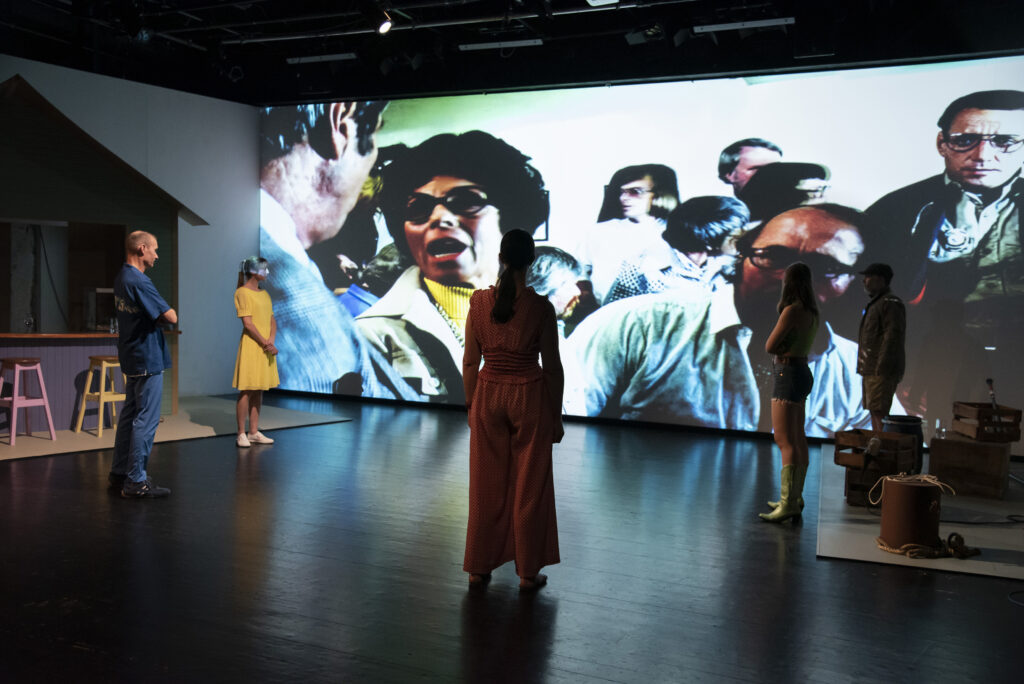
Jaws / Der Weisse Hai captures the aura of a turning point in history – the mid 1970s – and transforms the film’s images, its music, its evocative qualities into a long overdue conversation with a cultural icon. By examining the (then) critical content and (dwindling) relevance of Steven Spielberg’s 1975 movie Jaws we’re dancing and performing an entertaining and critical new look at this mega blockbuster (in fact, the first one of the so called “blockbuster era” of Hollywood movies).

In 1975, the white shark had to serve as a powerful metaphor, and the film’s worldwide mega-success led to decades of demonization of an animal species. But while the sensational success of Spielberg’s film conveys an image of the species Great White Shark that has long been untenable, it also opened up a new view of the relationship between man and animal, a view of the impending ecological catastrophe.

“It gets all psychological: You yell ‘barracuda!’ Everyone’s just ‘Ha?’. You yell ‘shark!!’ We got a panic on our hands on the Fourth of July”

Spielberg’s Jaws is a striking example of a cultural turning point: Just when the so-called counterculture seemed to finally dominate, preparations for a new era began. The names Thatcher, Reagan and Kohl and the economic terms neoliberalism, deregulation and privatization brought traditional values back to the fore and countered the ideas of counterculture. After ten years of youthful optimism, but also mistrust, defeat and fear – Nixon and Watergate; defeat in the Vietnam War, the oil crisis and economic decline – Jaws showed a society banding together in the face of a grave threat, recalling its old values and again producing heroes from its midst.
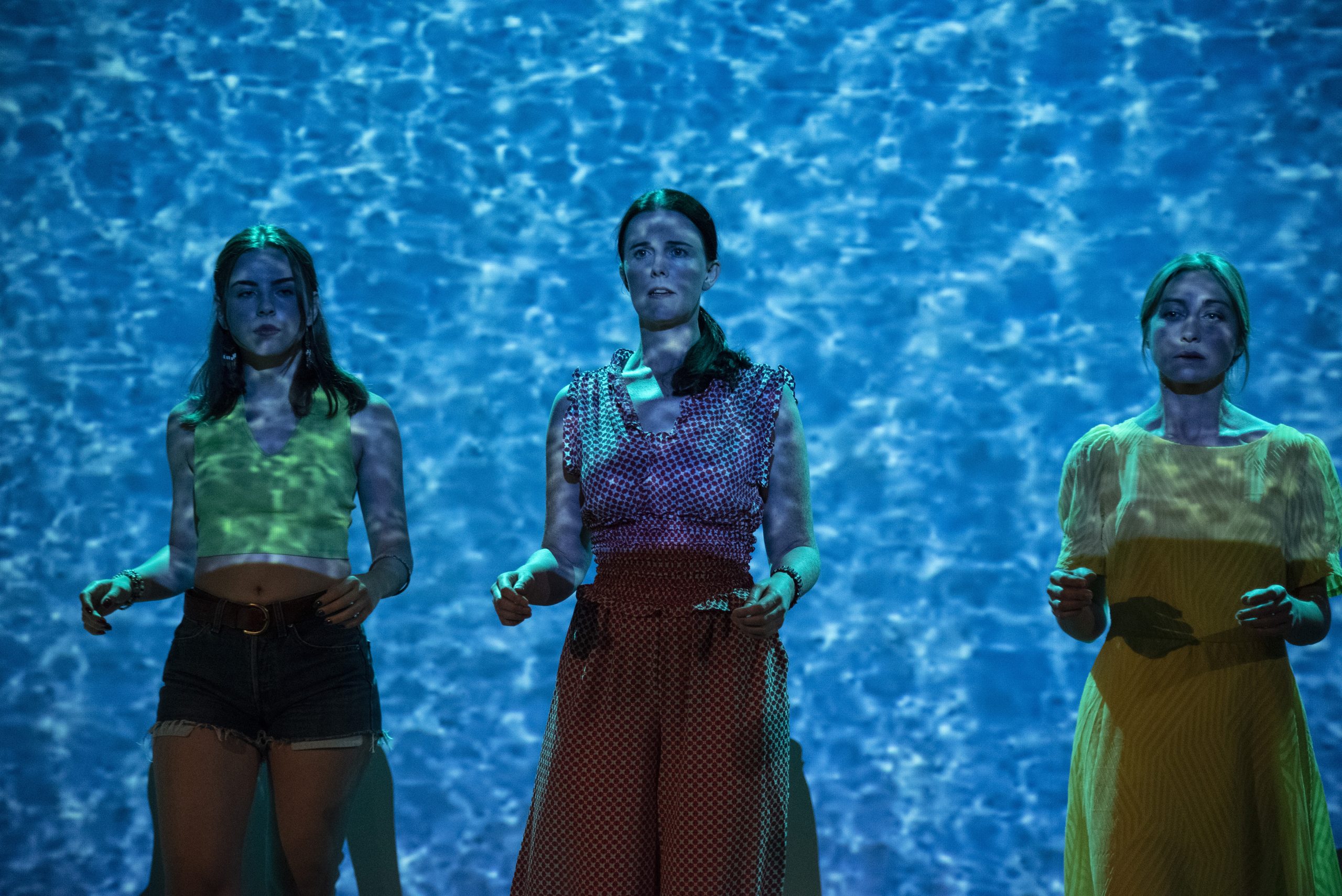
“We’re gonna need a bigger boat!!”

At the same time, the first voices were raised warning of an ecological catastrophe, of global warming and a major threat to the entire planet. In 1972, the Club of Rome´s famous report, The Limits of Growth, painted an early picture of the disastrous future of planet Earth. Today, overfishing of the oceans and species extinction also threaten the shark populations of our planet – and The Great White is no longer suitable as an animal metaphor for human greed and violence.

Jaws is a movie about a fish, a threat and a hunt. The fish is a giant Great White Shark that appears off a town on the East Coast of the United States. It kills several swimmers and becomes a threat to the summer season of the seaside town, which depends entirely on tourism. An adventurer, a policeman and a scientist pursue the fish in a boat and, after a losing battle, bring it down – the boat sinks, leaving the adventurer and the fish to die.
Bowie in Berlin

“Conversations with a Cultural Icon” (II)

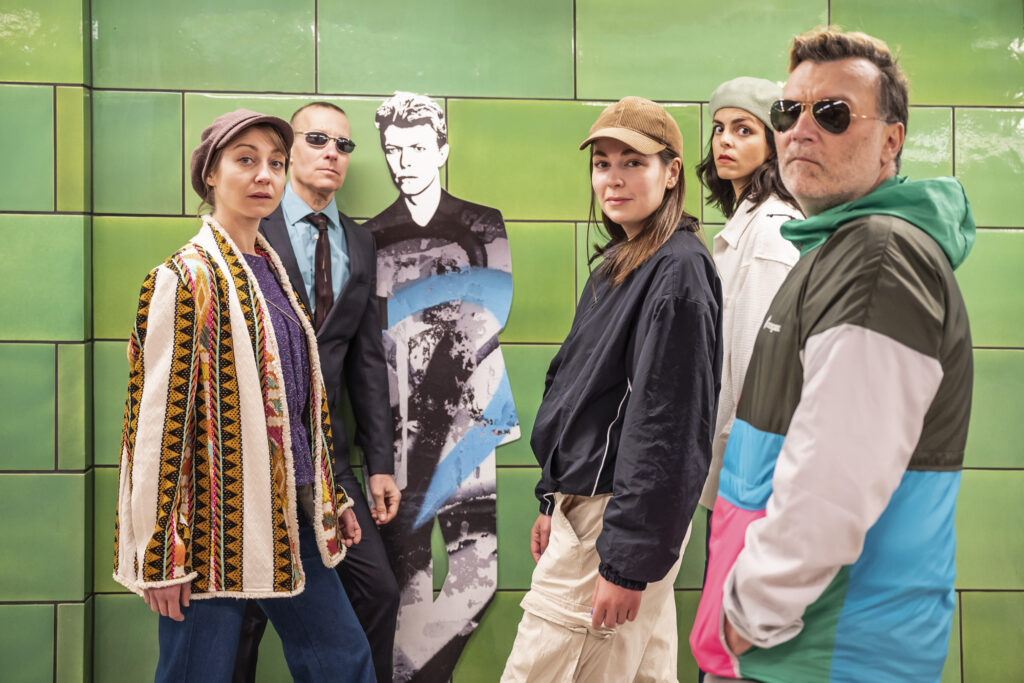
In the summer of 1976, pop star David Bowie moves from Los Angeles to Berlin. Why Berlin? Was he attracted by the mixture of Weimar nostalgia, isolated Wall city and niche location for the new music that would later be called Krautrock? In fact, he created radically new music in Berlin in the following two years, recorded both an anthem and a legendary album with `Heroes´, made a curious Weimar-era film with Just a Gigolo, and then disappeared into the pop-synthetic eighties.

“The musical concept of Grosser’s evening works brilliantly …. Just as Bowie’s musical, cinematic and fashionable work has lived from permanent transition and diversity of influence – ready to jump between Krautrock and Expressionism – so is this performance associative and fluid.”     Patrick Wildermann / Tagesspiegel

Great review in Tagesspiegel, read it HERE

In 1987, Bowie returned to Berlin to give a concert in front of the Reichstag, a stone´s throw away from the Wall. East Berliners who came to the Brandenburger Tor to listen started shouting “Bring down the Wall” – the first domino in a series of many that led to the fall of the Wall?

With a performative mixture of music, dance and text, Bowie in Berlin – as the second part of the series “Conversations with a Cultural Icon” after Jaws / Der weiße Hai –  explores the area where pop touches our lives: as music, as film, as art, as an attitude to life.

Today, the three albums of the so-called `Berlin Trilogy´ are considered the artistic highlight of David Bowie´s career.With his creative curiosity, he went through very different artistic phases in the course of his long career, thus appealing to a new audience each time, and ultimately even to a new generation.
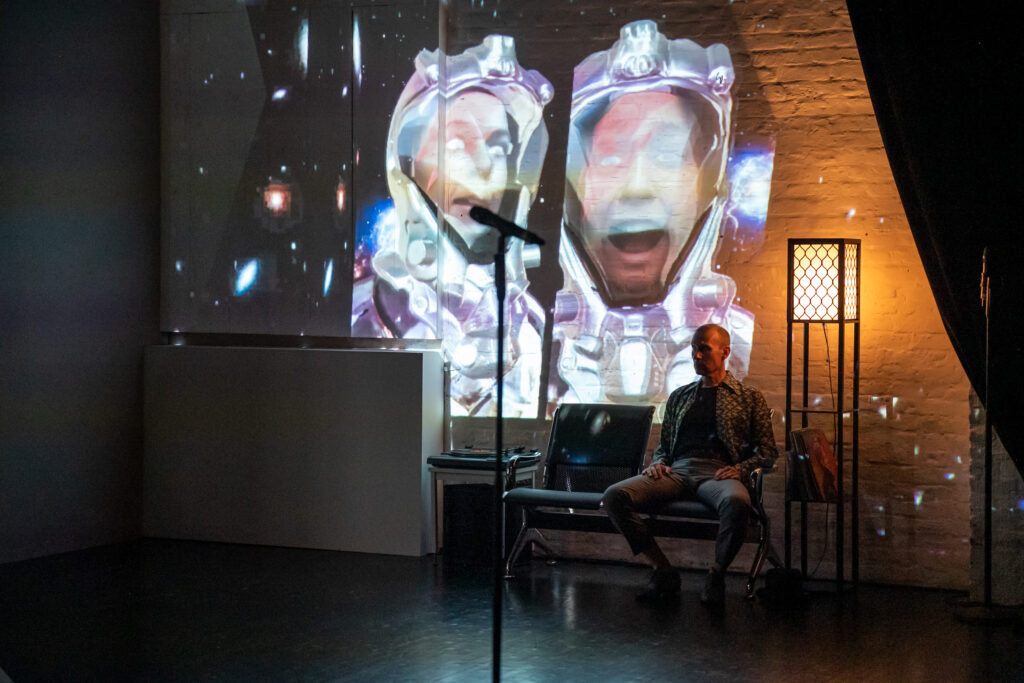
Nowadays, David Bowie is no longer just a pop star, but an important artist, to whom renowned museums dedicated a major exhibition ten years ago. Berlin officials even had a plaque placed on his home in Schöneberg.

Somehow, Bowie touches everyone. How? What does he have to say? What makes him a pop star, what makes him an artist? And why Berlin?
Sales of a Deadman

Only a suitcase remains of our salesman.

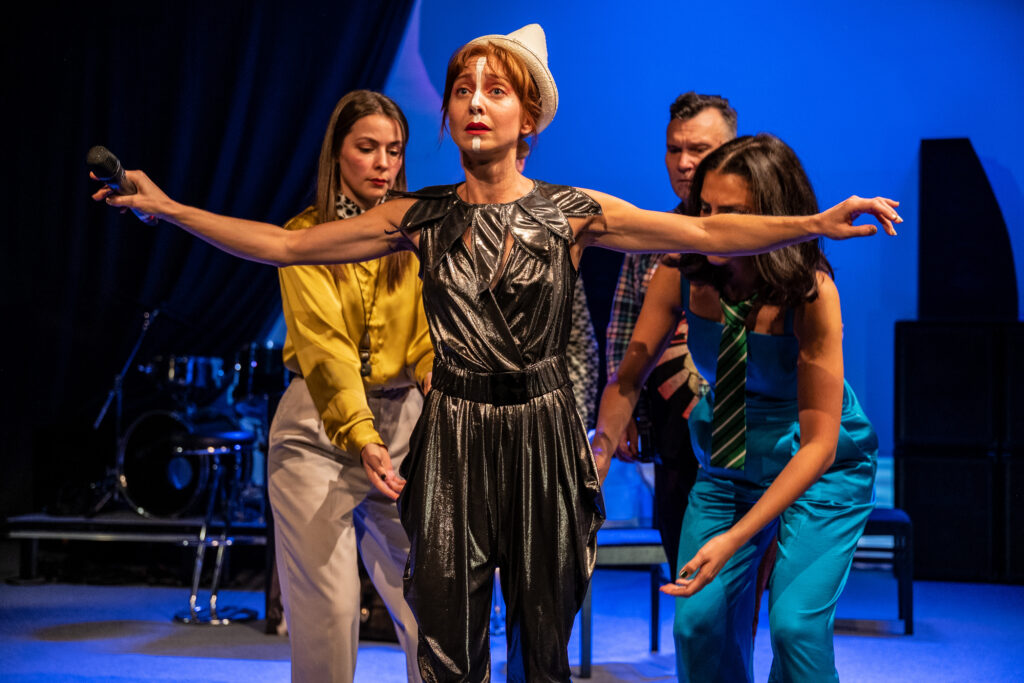
This postmodern composition celebrating the sound of everyday objects is inspired by Arthur Miller’s Death of a Salesman and picks up where the play left off: after the suicidal car crash and subsequent funeral, everyone is still out to make money.

This version of purgatory is all about selling, as death has now also become part of the vicious economic cycle. It is now a marketplace where the human being has been transformed into a commodity with their stories, relationships and memories all just waiting to be bought and sold.

Following two sold-out performances in February, we are very pleased to offer two additional performances of this new production and interpretation of the composition Sales of a Deadman by Evan Gardner.

Originally performed in 2014, this new staging features a whole new cast and artistic team, reexamining the role of work-life balance in a post-pandemic, post-patriarchial leaning society, in which capitalism and its place in the marketplace of life is turned on its head and questioned vigorously.

You are currently viewing a placeholder content from YouTube. To access the actual content, click the button below. Please note that doing so will share data with third-party providers.

More Information

Rumors in the Shadows

Berlin International Youth Theatre takes a trip to the castle of Henry VIII in the year 1535, where the power of rumor can cost you your head.

In this era of the internet, it’s hard to believe that we are as just easily manipulated as we were centuries ago. Drowning in a sea of misinformation while the one percent call the shots.

Our story: While the sneaky servant observes everything, the king’s trusted page is sent to spread fake news to incriminate Queen Anne Boleyn. Her loyal fans don’t believe it and try to stop the rumors. Other rumors are circulating as well, the ladies-in-waiting are running scared, everyone knows King Henry is a sexual predator but no one dares to do anything about it. Still more rumors are spreading which question the king’s sanity. We all know how this ends for the queen but how does it end for the pawns?

Martina J. Kohl

Family Matters follows the traces of a German family that, over generations, continues to cross the Atlantic in both directions. Like Elizabeth and Little Henry who, at the beginning of the 20th century, are forced to leave their beloved New York to return to the old country; the violinist Clara who can only live her passion for music in the America of the suffragettes; the war bride Toni, who courageously follows a G.I. to Nebraska after World War II; and, finally, the student Iris who is trying to find her place in both worlds in the 1980s. Looking back, they all ask the same question: “What if . . .?” What if they had not gone to America, or back to the old country? If they had not fallen in love? What if they had taken that other road and pursued their dreams a bit more forcefully?

Family Matters takes ordinary, yet memorable characters out of the yellowed pictures in the photo albums, gives them a voice and places them in their own time. Martina J. Kohl revives the past. She shows that today cannot be understood without the yesterday. And that migration, uprooting and the search for belonging are universal themes.

Martina J. Kohl worked in the Cultural Section of the U.S. Embassy in Berlin for many years where she developed and organized numerous programs. She especially loved the Literature Series that she coordinated with the English Theatre Berlin | International Performing Arts Center featuring established and up-and-coming American writers. Writing has been a passion ever since she taught at the University of Michigan. It is part of her seminars that she teaches regularly at Humboldt University Berlin and defined her work as editor of the American Studies Journal. As an advisory board member of the Salzburg Global American Studies Program, she continues to engage in transatlantic dialogue. Among her academic publications, Family Matters is her first book-length fictional work that is published in English and German. Born in the Rheingau region, she lives with her family in Berlin. martinajkohl.com

Publisher: PalmArtPress Berlin for FAMILY MATTERS. Of Life in Two Worlds / FAMILY MATTERS. Vom Leben in zwei Welten (2023)